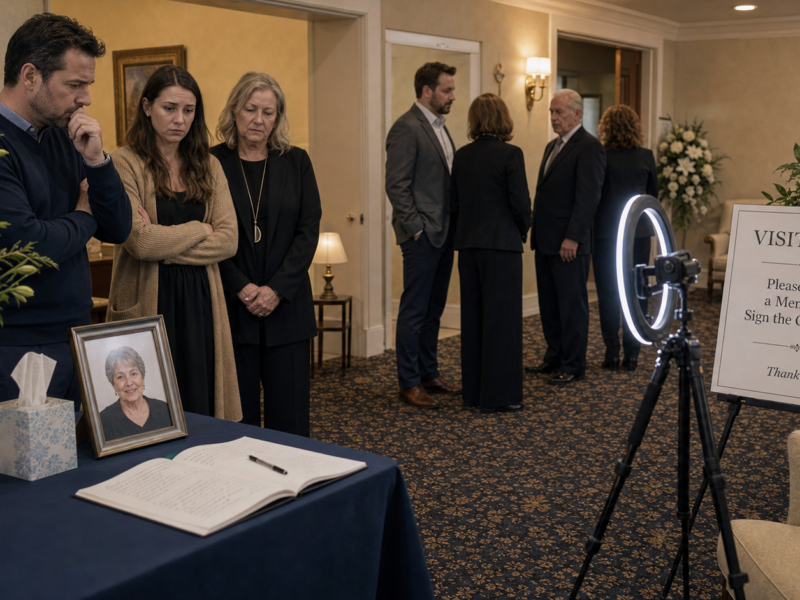
Funeral Guest Still Waiting To Explain His Connection
Howard has brought a photograph, a story, and enough time for the family to understand why he belongs near the front.
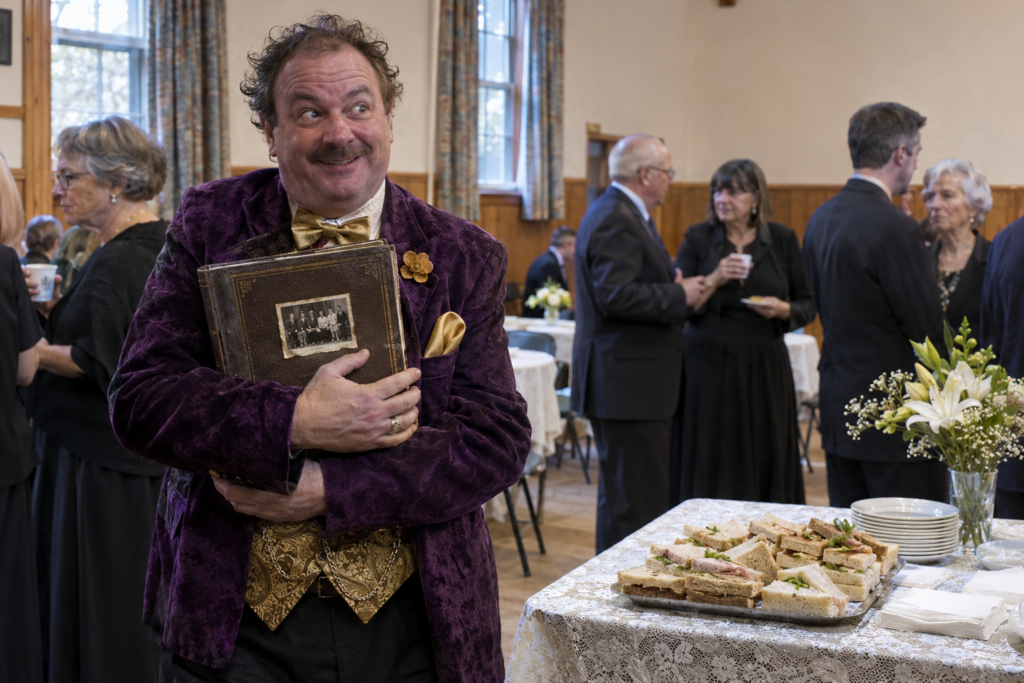
The funeral reception has been underway for 47 minutes, and retired sales representative Howard Kelleher is beginning to worry that nobody will ask how he knew the deceased before the good sandwiches are gone.
Kelleher, 63, arrived carrying a photograph from a company picnic in 1996. He has positioned himself near the coffee, where people are likely to pause long enough to notice that he is holding a photograph. So far, three mourners have asked whether he needs a cup and one has asked him to move so she can plug the kettle back in.
The deceased, Alan Mercer, worked with Kelleher for 14 months at a plumbing wholesaler. The connection is significant, Kelleher says, because those were important months for both men. He intends to explain that once someone creates a suitable opening.
“A lot of people here only knew him socially,” Kelleher said, studying a group that included Mercer’s wife and two adult daughters. “I saw what he was like when an order came in wrong. You learn a different side of a person.”
The photograph shows Mercer beside a barbecue, with Kelleher partly visible behind a woman neither man could identify at the time. Kelleher has marked the back with an arrow to indicate where he is standing. He initially considered bringing the whole album but decided one photograph would make the conversation feel less planned.
During the service, he sat four rows from the front. A friend of the family asked whether he wanted to join a group farther back, but Kelleher said he was comfortable where he was. He then spent most of the eulogy waiting for the plumbing wholesaler to be mentioned. It wasn’t. There was a long section about a man who had helped Mercer build a boat, despite the two of them never having shared a sales territory.
Kelleher says the omission doesn’t bother him. It’s a difficult day, and nobody could be expected to remember every chapter. Still, the speaker found time to describe a dog Mercer had for six years.
Reception volunteer Janine Patel has already heard part of Kelleher’s story because she made the mistake of asking whether the photograph should go on the memory table. He said he would prefer to keep it nearby in case he needed to explain who everyone was. Patel has since been careful to approach his section of the room carrying something heavy.
Kelleher briefly joined a conversation about Mercer’s garden. He waited until the other guests had finished describing the tomatoes, then said Alan had always been a practical man. Nobody asked him to elaborate. A woman instead produced a photograph of an enormous zucchini, and the conversation resumed around it.
At the guest book, he considered signing his name followed by Sales, 1995–1996. It would provide useful context for anyone wondering afterward how he fitted into the story. The previous entry said simply Love always, Ruth. Kelleher felt the lack of a surname or department made Ruth’s contribution difficult to assess. He signed his full name, underlined it once, and left enough space for a family member to add a note.
He also offered to help identify people in the photographs being shown near the window. Most were family holidays. He recognized nobody, but stayed beside the screen for several minutes in case the picnic appeared. When a picture of Mercer holding a newborn grandson came up, Kelleher remarked that Alan had always been good with people. The grandson, now an adult, said yes. Kelleher waited for him to ask how he knew.
He has been generous about that too. People remember different things. Some remember a tomato, while others remember the time Alan stayed late to help sort a delivery of copper elbows. Kelleher believes the latter tells you more about a man’s character, although he hasn’t yet found a way to introduce copper elbows without changing the mood.
At one point, Mercer’s nephew approached to thank him for coming. This looked promising. Kelleher turned the photograph outward and began saying they’d gone back a long way. The nephew nodded warmly and asked whether he could help carry a box of untouched programs to the car.
Kelleher agreed. He is now concerned this has established him as one of the helpful men from the hall rather than someone who occupied a meaningful period in Alan’s life. He carried the box slowly, hoping the nephew would notice the connection deserved more than a thank-you from the driveway.
The reception is nearly over. Kelleher has one final chance to speak to the family, who are standing together near the door and trying to decide who has the house keys. He has taken the photograph out again.
Mercer’s widow recognizes the picnic immediately. She says Alan hated that job. Kelleher laughs, ready to explain why that makes their friendship more remarkable, but she has already put a plate of sandwiches in his hands and told him to take plenty for the trip home.