Victorian Campaigns Ask Voters to Wrap It Up
One Melbourne field organizer wants volunteers to establish whether voters have reached the end of an opinion.
Victorian campaign workers are asking voters to finish telling them what they think by Friday afternoon, after several weeks of knocking on doors created a backlog of opinions that are still being delivered.
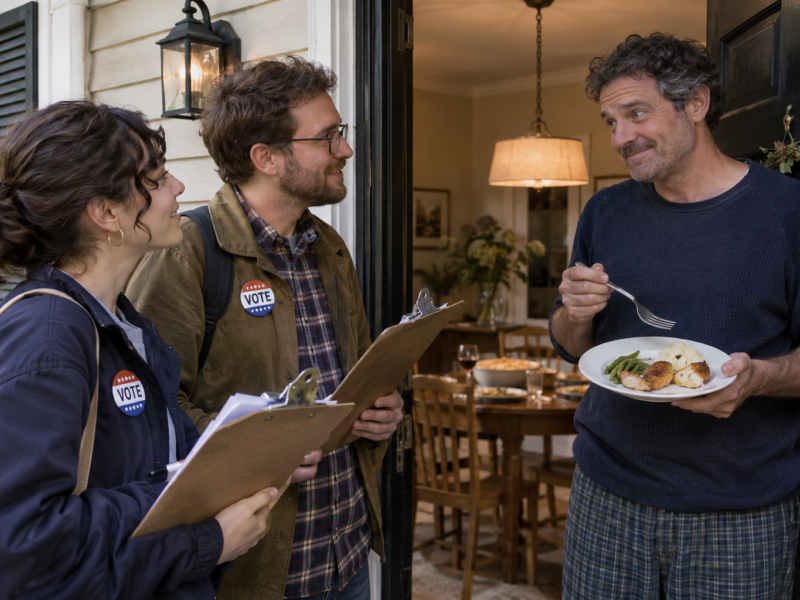
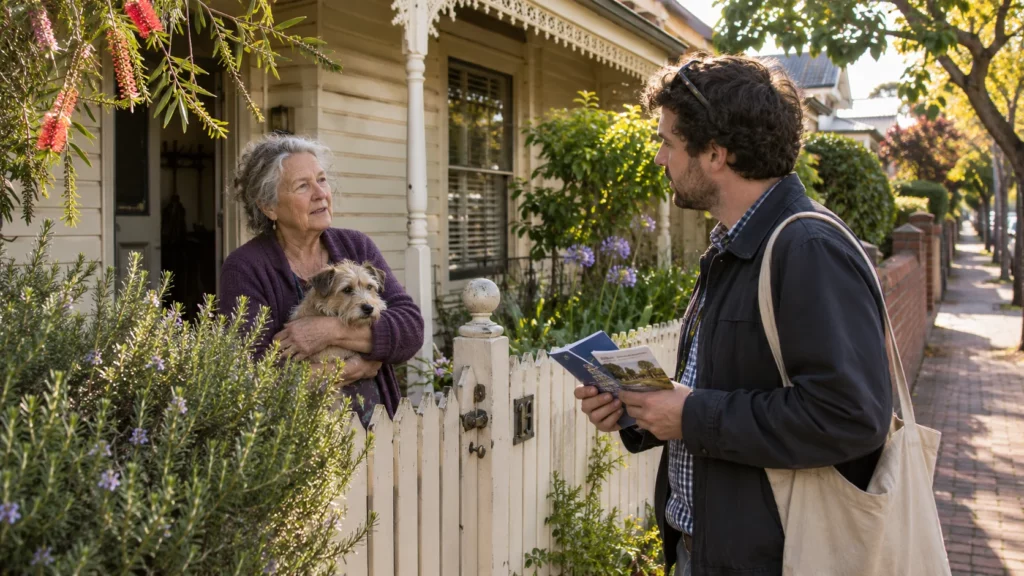
With the state election on 28 November and early voting already open, parties want to spend their final days getting supporters out. Campaigns are finding it difficult to leave the street. On a recent shift in Melbourne’s eastern suburbs, volunteer Dean Havel asked a woman whether she’d decided who she was voting for. She said yes. He reached for a pen. She asked if he was in a hurry.
The woman was Pauline Norton, who had spent the earlier part of the afternoon waiting for a call from the company that installed a fence across the end of her street. The fence has poles that come out. Her theory is that you could remove one of the poles to get a wheelchair through without disturbing the arrangement. She thought Havel looked like someone who might be able to find out.
“We’ve had some very good conversations,” said Yasmin Ordish, a field organizer for one Melbourne campaign. “For the next round of doors we’re asking volunteers to thank people for their first opinion and establish whether they’ve reached the end of it.”
Havel has been doing door-knocks for several campaigns over the years. He carries a water bottle and brings a folding hat in case he ends up talking to somebody on the sunny side of the street. Lately he’s started picking up a little brochure from the footpath before knocking, in case it’s from a candidate the household would prefer to discuss first. At one property he read it while a resident fetched a second piece of mail. The resident wanted to know if they could put both notices in the recycling.
One team has started recording when a conversation begins to go inside. A resident offered a volunteer a cup of tea, which was logged as strong interest until the volunteer made it into the kitchen and realized the tea was for somebody already there from another campaign. Both were asked to take a look at a photograph of a tree root. Neither had enough local knowledge to say which tree it belonged to.
In a briefing before the final weekend, the field organizer asked volunteers to find a natural point to move on. She gave the example of a dog waiting to be taken for a walk. Norton brought her terrier to the gate and said he could stay there all afternoon. Havel held his leash for a moment while she went to get a folder from the front room. It contained the correspondence about the fence, filed with a rubber band around the letter from the company that had installed it.
Norton had already voted. She had read enough material to decide on a candidate and was keeping one of the leaflets folded under a short table leg. She said she’d have told Havel that earlier if he’d asked before she thought of the fence. Havel put it down on his list and made a note beside her name that she knew what she was doing. A supervisor called to ask whether that meant she supported the campaign. Havel said he wouldn’t try to persuade her of anything without first dealing with the pole.
Further up the street, a man called out that he’d decided how to vote and was happy to tell anyone who came to the door. Volunteers made it through two gates before discovering that his daughter had asked him to get rid of an old clothesline and this was how he intended to get enough people together to carry it.
The campaign is aiming to wrap up undecided conversations by 4 p.m. Friday. Havel says he has one left to finish with Norton. He went back to the fence with her to see if the pole moved, and while they were there she asked if anybody had told him about the drain.