Massachusetts Oysters Assigned First Public Works Project
A Westport River reef restoration has introduced oysters to the part of public service where people ask why the work isn’t finished.
WESTPORT, Mass. — A group of oysters in the Westport River has been assigned a public works project and would like to get started before anyone asks why it’s taking so long.
The project came up at a meeting about restoring oyster reefs. A resident wanted to know when he would notice the difference. The person running the meeting said the work would happen over a period of years. The resident wrote “years” on the handout and asked whether there was any possibility of getting his part of the river done sooner.
The Associated Press reported that researchers are working on a large-scale oyster reef restoration in Massachusetts’s Westport River. The work is intended to bring back habitat and improve water quality over time. As far as the oysters are concerned, the first order of business is to be left somewhere they can get on with it.
“They’ve given us a lot of flexibility on that,” said Paula Timms, a volunteer who has been asked to explain how the project looks from shore. “On some days you’ll see somebody on a boat. Most days, once the oysters are there, you’ll see the same thing you saw yesterday.”
Timms was approached at a dock by a man who wanted to know which direction the water would be cleanest in first. She explained that there were a number of factors and told him about the general aims of the project. He wanted to know if she could point to anything. She pointed to the river. He said that was a little broad for what he was asking.
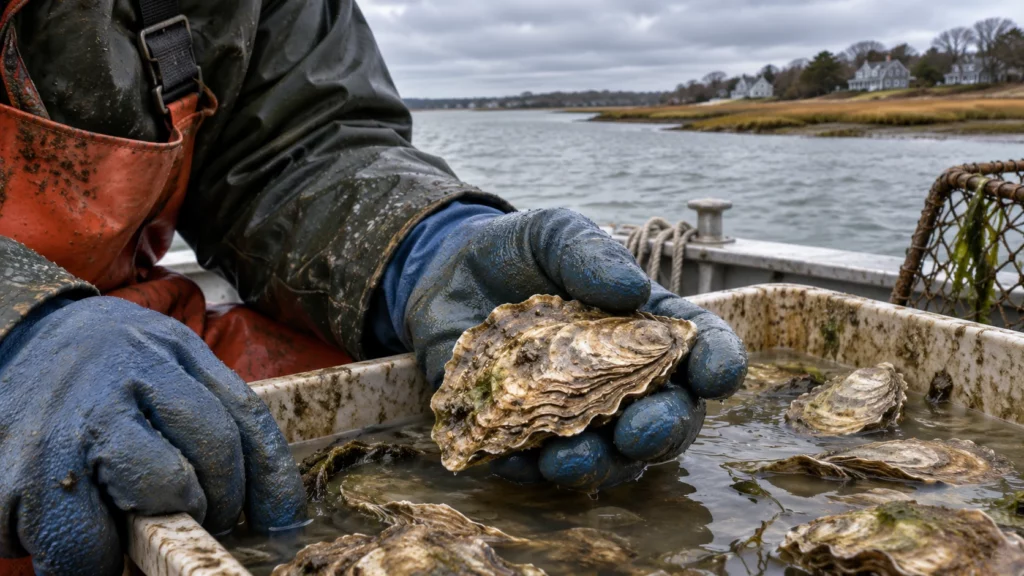
People who signed up for email updates received a note describing what researchers had found on a visit to the site. Several asked for pictures. Timms sent a picture of an oyster. Someone asked whether the oyster in the picture was part of the project or an oyster like the ones that would be part of the project. Timms said it was part of the project, in the sense that it was the one she’d been able to get somebody to take a picture of while they were out there.
Local officials are discussing how to tell if the work is on track. A volunteer proposed going out to see the oysters every month. He said if there was nothing to report, he could come back and say so. A town employee asked if they could arrange to get that in writing. The volunteer said he could do that from shore if they were comfortable with him saying it before he made the trip.
The oysters do have an advantage over some of the town’s earlier improvement projects. People can continue to look at the river while the work is underway. A resident asked whether it would be possible to maintain that arrangement for the whole project. She didn’t want to find out later that the good place to sit on the bank was going to be used for something else. Timms said she’d make a note of it and asked which place the woman meant. The woman said she would rather show her when there were fewer people around.
At a recent update, the project group put up a picture of the area where it hopes the reef will grow. A man who’d been at an earlier meeting said he remembered that photograph. Timms said that was good, as it would give him a point of reference when they took another one. He asked if anybody had gone out to see whether the spot still looked the same. Several people had. It did.
The next update is due in the spring. Timms has been encouraged to include more pictures and to make sure readers can see how the work below the surface relates to the places they use every day. She asked if she should include a map. The man who wanted his part of the river done first said he’d be happy to send her one.
He’d already got a circle around the house and could add an arrow if that would help.