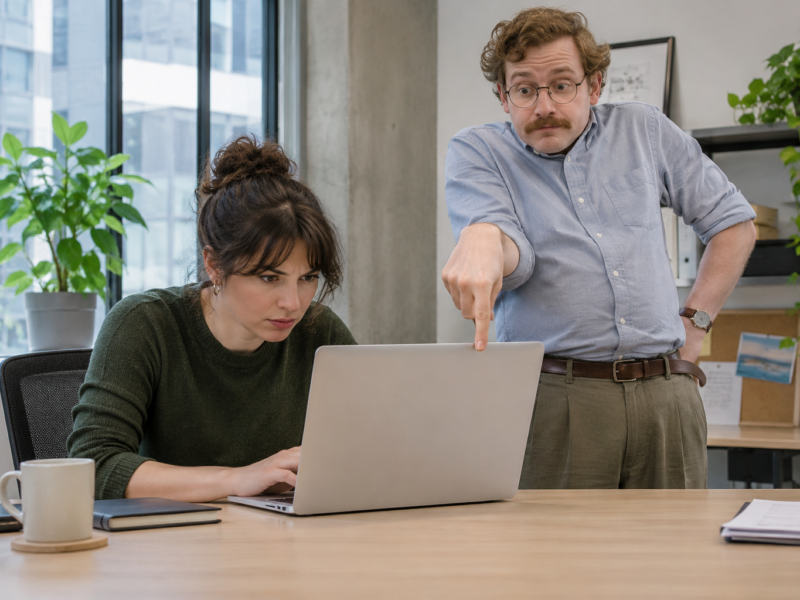
Scientists Find Plants Grow Better Without You
The control group was allowed to have a normal afternoon.
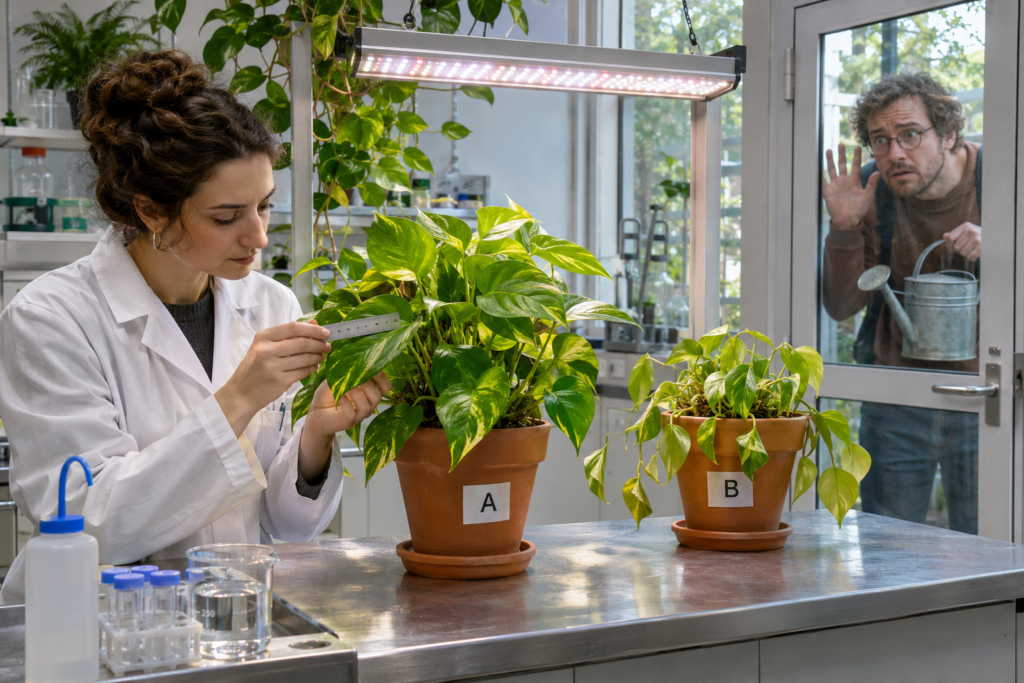
Houseplants grow better when their owners leave the room, according to researchers who spent six months trying to separate the effects of sunlight and water from the effects of a man standing over a pot saying it looked happier yesterday.
Botanists at the Wexler Plant Research Center found that common indoor plants produced larger leaves when their care was carried out by a technician who completed the job and left. Plants exposed to attentive owners spent much of the same period being moved eight inches to the left and then back again.
“We controlled for water, soil, and light,” said lead researcher Dr. Leila Haddad. “The remaining variable was someone who had watched a video and needed to do something about it.”
The study began with 48 pothos plants of similar size. Half were assigned ordinary laboratory care. The other half were assigned volunteers who described themselves as plant people, a distinction confirmed by asking whether they’d ever bought a tiny ladder for something that couldn’t climb.
Owners could visit their assigned plant for 30 minutes a day. They were told the plant already had everything it needed. Most used the time to investigate why it didn’t seem to be growing faster.
One participant turned his pot through a quarter circle every four minutes to give each leaf a fair share of the light. Another kept touching the soil while explaining that overwatering was the main thing amateurs got wrong. A third brought a chair so she could observe her plant without disturbing it, then spent the session adjusting the chair because she was blocking the sun.
Researchers had expected the visits to affect growth through changes in care. They were less prepared for the number of plants that acquired decorative rocks.
The first visible difference appeared after three weeks, when the unattended group began putting out new leaves. Their owners requested access to the room to see what the technicians were doing. Access was refused. Several owners said this confirmed that there was a trick.
Haddad’s team reviewed hundreds of hours of video to identify the behaviors associated with poor growth. Repeatedly lifting a plant to judge its weight was common. So was standing it in a sink and announcing that it needed a proper drink, despite the moisture sensor showing that it had just had one.
“A plant can be having a normal afternoon,” Haddad said, “and then somebody comes home with a mister.”
To test whether the difference was caused by owners’ physical interference, researchers placed a second group behind glass. Volunteers could look at the plants but couldn’t touch them. Growth improved, although one man held a bag of fertilizer against the window for 12 minutes in case the technician hadn’t thought of that.
The plants grew fastest during the lunch break.
Participants have challenged the findings. Julian Mercer, who has 19 plants and an account dedicated to their recovery, said the laboratory didn’t resemble a real home because its windows weren’t competing with furniture. He also questioned the decision to measure leaf growth, arguing that his plant had become much more interesting after the experiment gave him something to worry about.
Mercer has asked for its pot back. The plant is still using it.
A final trial tested the effect of going on vacation. Owners left instructions of up to four pages, then departed for ten days. Technicians watered the plants according to the sensors and ignored the instructions, including a request to turn one pot toward the television during the evening news.
Nearly every plant improved. Owners attributed the results to the strength of the instructions. One asked whether the researchers had played the playlist.
Haddad is now seeking funding to study what happens when owners announce that a plant is dead while it is standing in front of them with several green leaves. Her team expects the declaration to be followed by a trip to the garden center and the purchase of a considerably larger pot.
The original plants remain in the laboratory. Their owners have been told they’re doing well. Photographs are available, although the researchers have asked that nobody draw circles around a leaf and send them back.