Password Manager Inherits Man’s Entire Personality
A routine account transfer has left his family with every answer to every security question he ever considered formative.
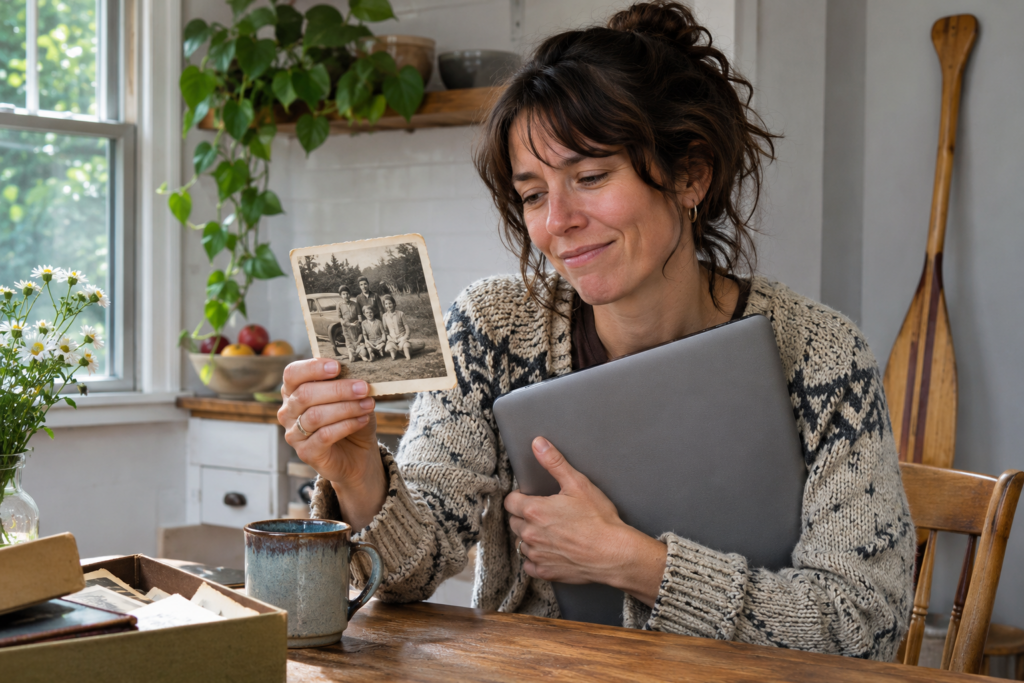
Estate lawyers in Columbus are working through an unusual inheritance after a password manager received most of a deceased man’s personality, leaving his family with a canoe and several practical concerns about the garage.
The transfer occurred when 67-year-old Leonard Voss designated the software as his trusted contact. Over 14 years, he had supplied it with his first pet, childhood street, favorite teacher, and the make of the car in which he first felt respected.
The information had accumulated in small, useful pieces. Leonard could never remember which account wanted the town where his mother was born and which wanted the name of a person who had once been kind to him. The password manager remembered both. His children generally received the version of these stories that explained why they shouldn’t touch the thermostat.
His daughter, Nora, learned most of this information while resetting a streaming account. She had previously understood her father to be a man who liked weather and required dinner at six.
Nora and her brother, Paul, spent their first afternoon with the vault comparing what the software knew to what they had been told. Leonard’s favorite childhood memory involved a train journey neither recognized. A teacher they had never heard mentioned appeared in six account recovery forms. The man who had spent every vacation pointing out better parking had apparently considered leaving everything to live near the sea.
“The app knows he wanted to be a drummer,” she said. “We got a folder of appliance warranties.”
Paul initially assumed the answers were invented for security. He said his father sometimes made things up so companies couldn’t build a profile of him. This theory lasted until the family found a photograph of Leonard standing beside the car in which he first felt respected. On the back, he had written the model and the exact price he paid. Paul had last seen the photograph being used to level a bookcase.
“He told me that car was a waste of money,” Paul said. “I bought my first car and he spent a whole afternoon explaining depreciation. The app has a slightly different account of what it meant to him.”
The password manager has since begun suggesting longer passwords based on Leonard’s unfulfilled ambitions. It has also changed the family tablet’s background to a beach he visited in 1983 and locked everyone out of the canoe club membership he had quietly maintained despite selling the canoe’s trailer.
The canoe has become particularly difficult to assess. Leonard described it at home as something he ought to get rid of. Online, he used its name to protect a collection of photographs taken along a river. The family is now trying to establish whether the canoe was an expensive mistake, as he’d always maintained, or the only object in the garage that had been getting an honest answer.
His widow, Elaine, says she isn’t surprised that Leonard talked more freely to a computer. A security question let him speak without anybody asking what had brought that up. She remembers him spending an evening choosing the name of his favorite song for an account. When she asked what he was doing, he said the bank was being a pain.
Probate attorney Joel Nasser said digital estates increasingly contain the conversations relatives assumed they would eventually have in person. “We located an answer about the proudest moment of his life. It was getting a discount on a dishwasher. His son was born the same year, but the question didn’t specify a category.”
Nasser has arranged a meeting to go through the less practical parts of the inheritance. Paul would like access to the old music files. Nora wants to see the photograph from the beach. Elaine has asked whether someone can recover the login for the garage door installer, because Leonard’s attempt to be remembered has coincided with the door refusing to close.
The password manager has offered assistance throughout. It can identify duplicated information, flag answers that are too short, and suggest a stronger version of a memory the family has only just discovered. Nora declined a recommendation to add a number and a special character to the name of the woman her father first wanted to marry. She would like to read the plain version before improving it.
The family can access the full vault after a 30-day waiting period. Nora says she’ll use the time to prepare for whatever made her father’s first crush suitable for both a security answer and 19 variations of a banking password.
The family has agreed to keep the vault intact until everyone has had a chance to look. Paul has also begun writing down a few things he wants his own children to know, starting with the name of his first band. His daughter asked why he was telling her. He said it might help if she ever needed to get into his electricity account.
For now, the app has asked whether she remembers the street where she grew up. It has Leonard’s answer ready if she doesn’t.