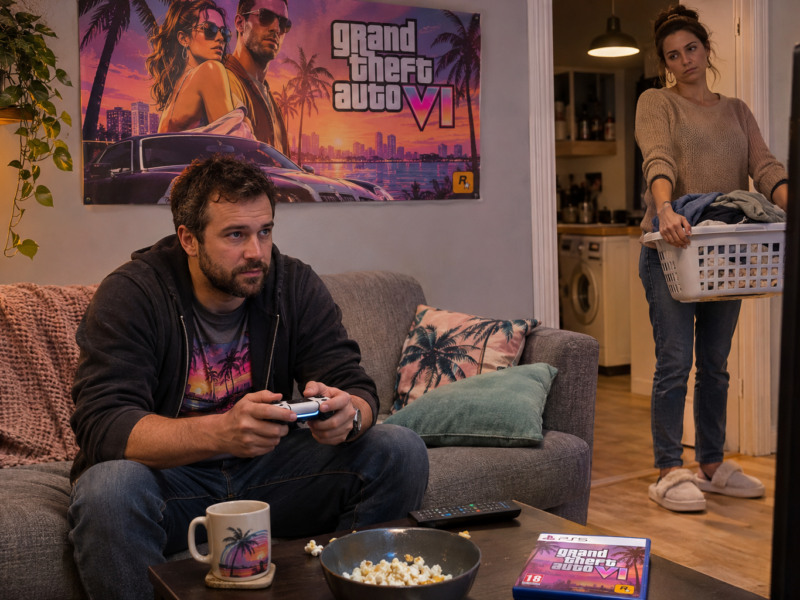
GTA 6 Review: Vice City Grows Up
A remarkable open world, superb driving, and a crew that would like to discuss what happened last time.
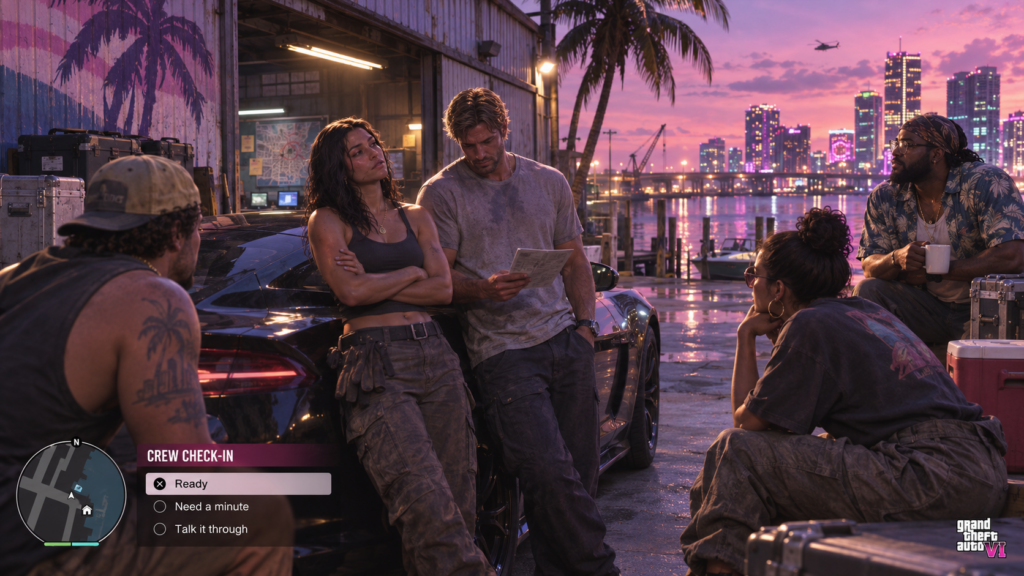
I was about six hours into Grand Theft Auto VI when I first delayed a robbery because somebody in the crew needed to talk. We’d bought the equipment, marked the route, and parked a perfectly good stolen car outside. Lucia asked if everyone was comfortable with the plan. I chose the quickest reply. She asked me to let the driver finish.
That exchange says a lot about Rockstar’s return to Vice City. This is a gorgeous, frequently excellent crime game with a new interest in the arrangements people make before doing something stupid together. The driving is superb. The city keeps pulling me away from the main story. Occasionally, I find myself waiting for a man holding a duffel bag to explain why he felt unheard in the previous cutscene.
After 43 hours, I’m largely sold on it. There are stretches of the campaign I’d happily lose, and a couple of supporting characters whose calls I began screening before the game gave me the option. But Jason and Lucia are worth following. Their partnership has enough warmth, irritation, and unfinished conversation to make the long drives feel like part of the story. I wanted them to get away with it, even when I wasn’t entirely sure what they were getting away with anymore.
The opening
Lucia’s prison introduction is quieter than I expected. You’re given a little room to walk, listen, and work out which conversations are worth joining before the story starts moving. The camera stays close enough to make the building feel restrictive without turning every doorway into a wrestling match. Your first few decisions concern favors and access. Somebody wants a phone call. Somebody else knows who can get you one. Being useful is the easiest way to become visible.
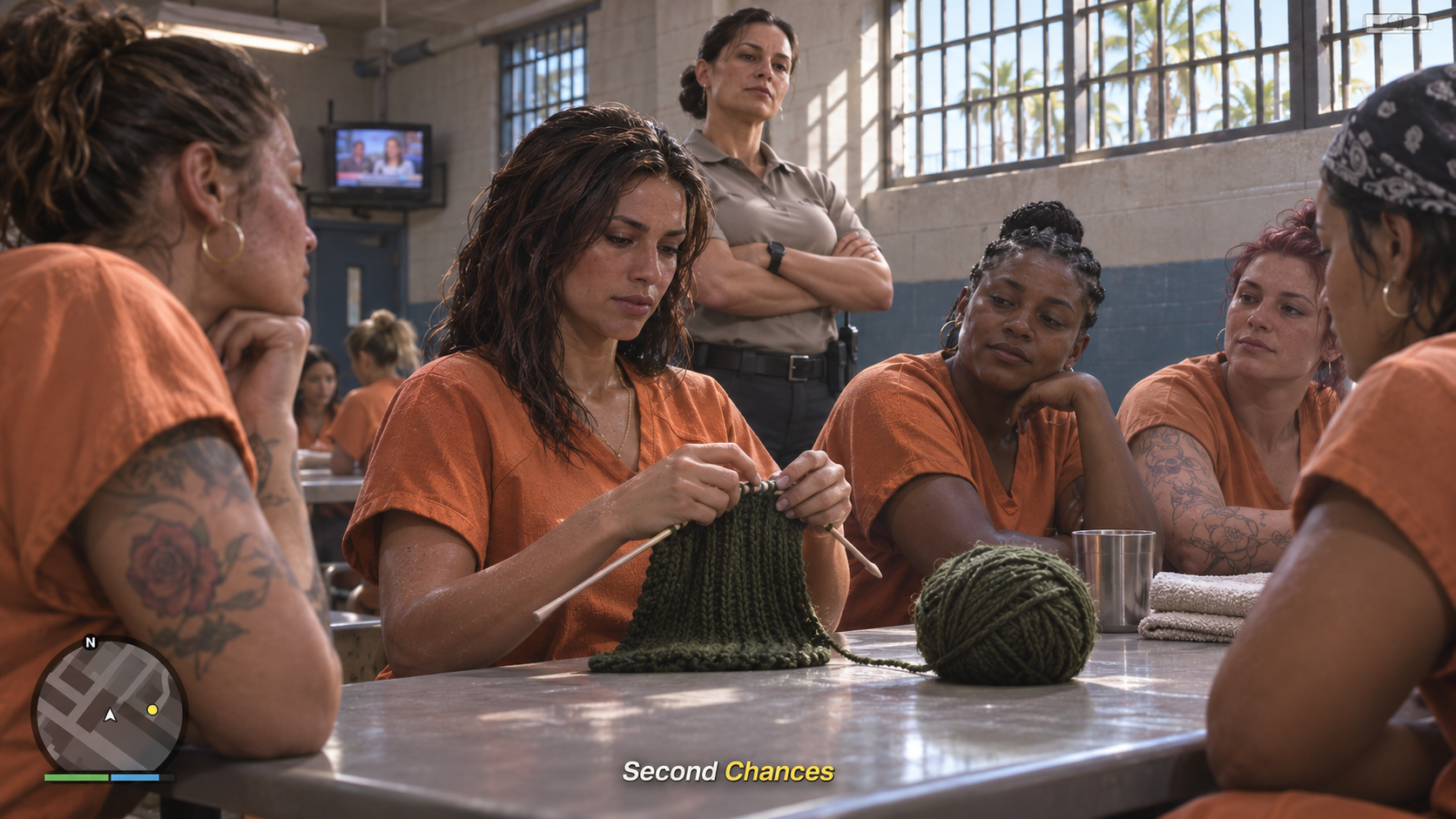
Lucia starts a knitting club as one of the optional rehabilitation activities. An inmate named Gloria helps her set it up, having apparently waited several years for somebody who can reliably count stitches. Lucia agrees because Gloria knows things about the people processing her release. You can leave after the first meeting, but staying gives you a better relationship with her and a plain gray cardigan that sits in your inventory looking like a modest reward for a modest diversion.
I liked the scene. The little animation of Lucia pulling a row loose has the same care as far more expensive-looking moments later on. Conversations continue while your hands are occupied, and you can tell who in the room is pretending to work so they can listen. It’s a good introduction to a character who watches people before deciding what she can use. I assumed I’d done a small favor and moved on.
Jason’s introduction opens the game out. His first job is simple enough to let you make a mess without losing track of the objective. You’re collecting a car from a man who has begun to feel strongly that it should remain his car. There are several ways into the property, and I spent too long trying to be discreet before reversing into a bin and making the decision for everyone. A shorter route exists. I found it on the way out, under considerably less favorable conditions.
Switching between them soon becomes comfortable. Jason tends to arrive with a plan that would work if nobody else were present. Lucia notices the people. The script is best when it lets that difference cause a small argument rather than explaining their personalities in a speech. Early on, he tells her a contact is reliable. She asks how long he’s known him. Jason gives a date that turns out to be the previous afternoon.
Vice City
Vice City is the strongest reason to play. Traffic feels impatient rather than neatly arranged around the player, and the best drives happen when you miss a turn and decide to keep going. I spent an entire evening following the coast in a car I’d intended to abandon after a mission. The route eventually took me through streets I recognized from a much worse evening, and I was pleased to discover that I knew how to get home without consulting the map.
Returning to a neighborhood in different weather changes how you use it. Water collects at low corners. People crowd beneath narrow awnings, which makes an otherwise easy turn briefly awkward. Shops close while other places get busy. The world is especially convincing when nothing interesting is happening: a delivery truck blocking half a street, someone walking back to a car they’ve forgotten to lock, a queue that doesn’t exist to give you something to shoot.
Cars have enough weight to make a clean escape satisfying without requiring much adjustment. There’s a lovely moment when you stop fighting a rear-wheel-drive coupe and start anticipating it. I could feel myself getting better at a particular route instead of merely remembering where the obstacles would appear. A damaged front tire changes the rest of the journey. So does choosing a vehicle because it looks good before checking whether it can carry the people who need to leave with you.
Motorcycles remain my preferred way of ruining an otherwise successful job. I bought one after an early payout, spent a happy ten minutes learning how quickly it could move, then discovered a curb I’d previously regarded as decorative. The next mission began with me taking a taxi. Lucia had nothing to say about that, which was more effective than a joke would have been.
The radio is busier than I wanted. Some shows are funny, but the writing occasionally seems frightened that you’ll change stations before it has completed the thought. I increasingly turned the music up and let the hosts disappear. There’s enough sound outside the car to make driving without the radio worthwhile too. A good chase has a shape you can hear, from the first siren through the part where you think you’ve lost everyone and discover you haven’t.
On foot, the game is a little less certain. Picking up a small object can still require a second adjustment when I’d rather be moving, and tight spaces sometimes turn a conversation into a tour of the back of Jason’s head. These annoyances become noticeable because the rest of the world is so good at letting you do the obvious thing. I rarely had to think about driving. I occasionally had to think about standing beside a shelf correctly.
Common ground
The crew begins as a practical concern. You need a driver, someone who understands the building, and people who won’t improvise when the money appears. Recruitment gives side jobs a purpose beyond unlocking another vehicle. Helping a contact with a small problem makes them available later, and you learn enough about them to have a preference. I grew attached to a driver called Ellis because he always brought a car that looked forgettable.
Then comes Common Ground, a mission built around sensitivity training. Lucia has been told that her crew won’t get access to a better-paying operation until everybody completes a short workshop. Jason regards this as something they can click through. Mara, the coordinator, regards that attitude as a useful place to begin. You’re seated in a rented room above a business that appears to have stopped trading during a previous economic cycle. The fluorescent lights take a while to come on.
It’s a seven-minute role-play exercise about a job that went badly. Each person describes what they thought was happening. You’re asked to repeat the concern back before answering it. My first attempt failed because I used a reply that summarized the practical problem and omitted the feeling attached to it. Mara acknowledged that I had remembered the route correctly. She wanted to return to the feeling.
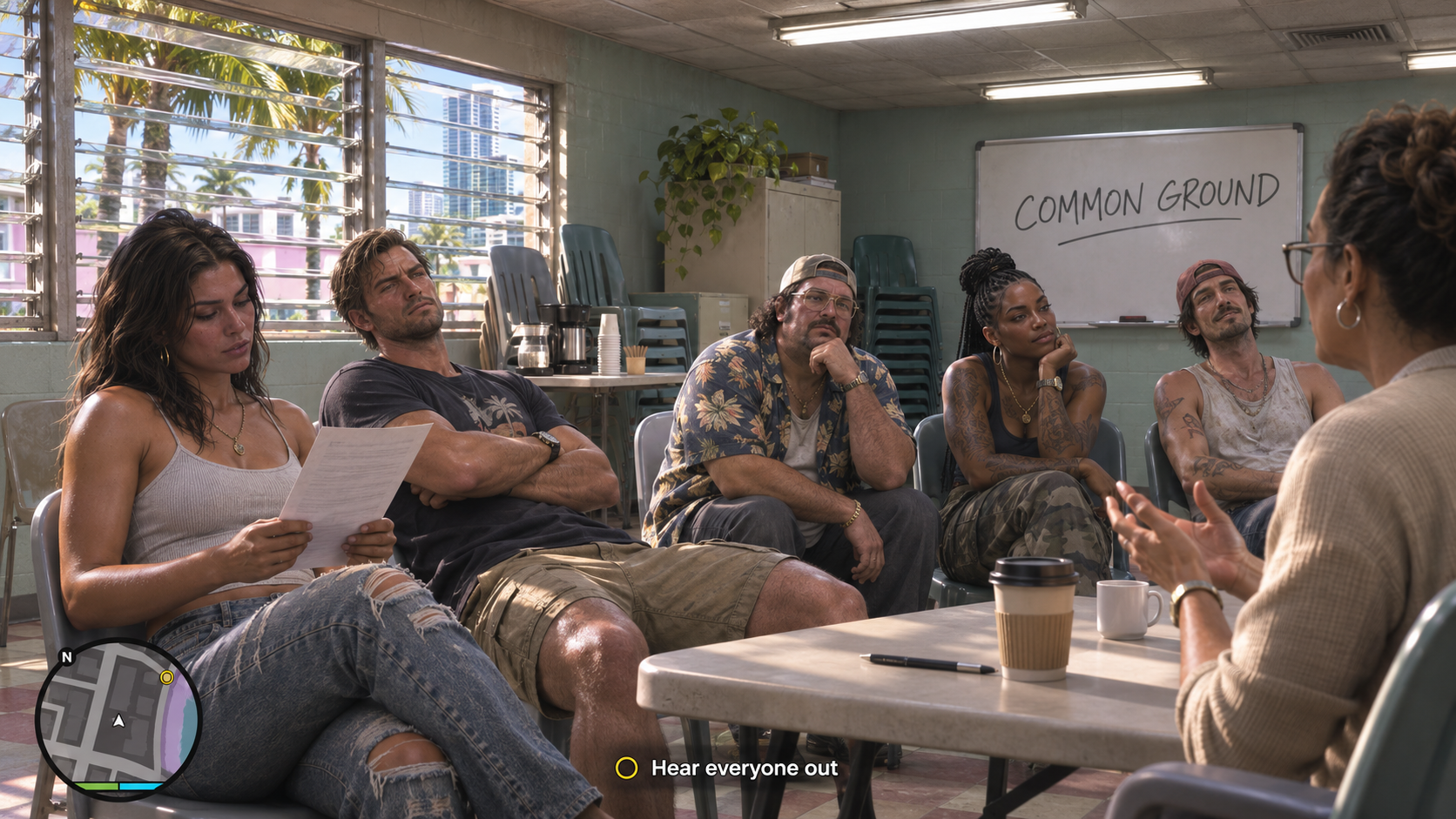
There’s a better scene inside this than the premise suggests. Ellis explains that when Jason changes the pickup point without saying anything, the driver looks incompetent to everyone else. The complaint matters during a later escape, when you’re given an easy chance to make exactly that mistake. Because I’d sat through the room, I understood why he objected. I chose the slower exit we’d agreed on, and for once the crew got into the car without anybody shouting.
Less successful is the mission’s insistence that everybody speak. One teammate has no complaint. The conversation waits until you find a way to help him identify one. It turns out he’d been uncomfortable with the phrase backup guy. He’d prefer to discuss what his actual responsibilities are before the next job. Fair enough, although this could have happened while we were moving the bags.
The DEI rating appears after that meeting. Diversity, equity, and inclusion sit in the planning screen beside experience and the percentage each person receives. At first I treated it as background information. Later, a specialist refused to join until we’d given a newer teammate a chance to lead something. The easiest solution was a small side job I’d been postponing. I put the new person in charge and discovered that Jason had been solving a problem she didn’t have.
I can see this system becoming the only thing some people discuss. What matters while playing is whether it produces a different decision. Occasionally it does. Occasionally it gives an ordinary recruitment requirement a longer name. I was more interested when a character remembered being passed over than when the menu informed me that our development score had risen. The characters can carry this without the extra paperwork.
The first score
Our first substantial heist took longer to prepare than to complete. That ratio will be familiar, but the preparation is satisfying because most of it changes something you can notice. I found a quieter vehicle, learned when a service entrance would be unattended, and persuaded Ellis to stop calling my preferred route the scenic option. The map marked a sensible way through. I used a shortcut I’d found by getting lost and felt briefly much cleverer than I am.
Lucia handles the distribution of money with a seriousness the earlier jobs don’t prepare you for. Equal pay is the default. You can propose different cuts, but the crew asks you to explain the difference. Paying Ellis less because he waited outside was accepted the first time I tried it. After the third job, he asked how I expected to leave the building. I restored his share. His next car had a full tank.
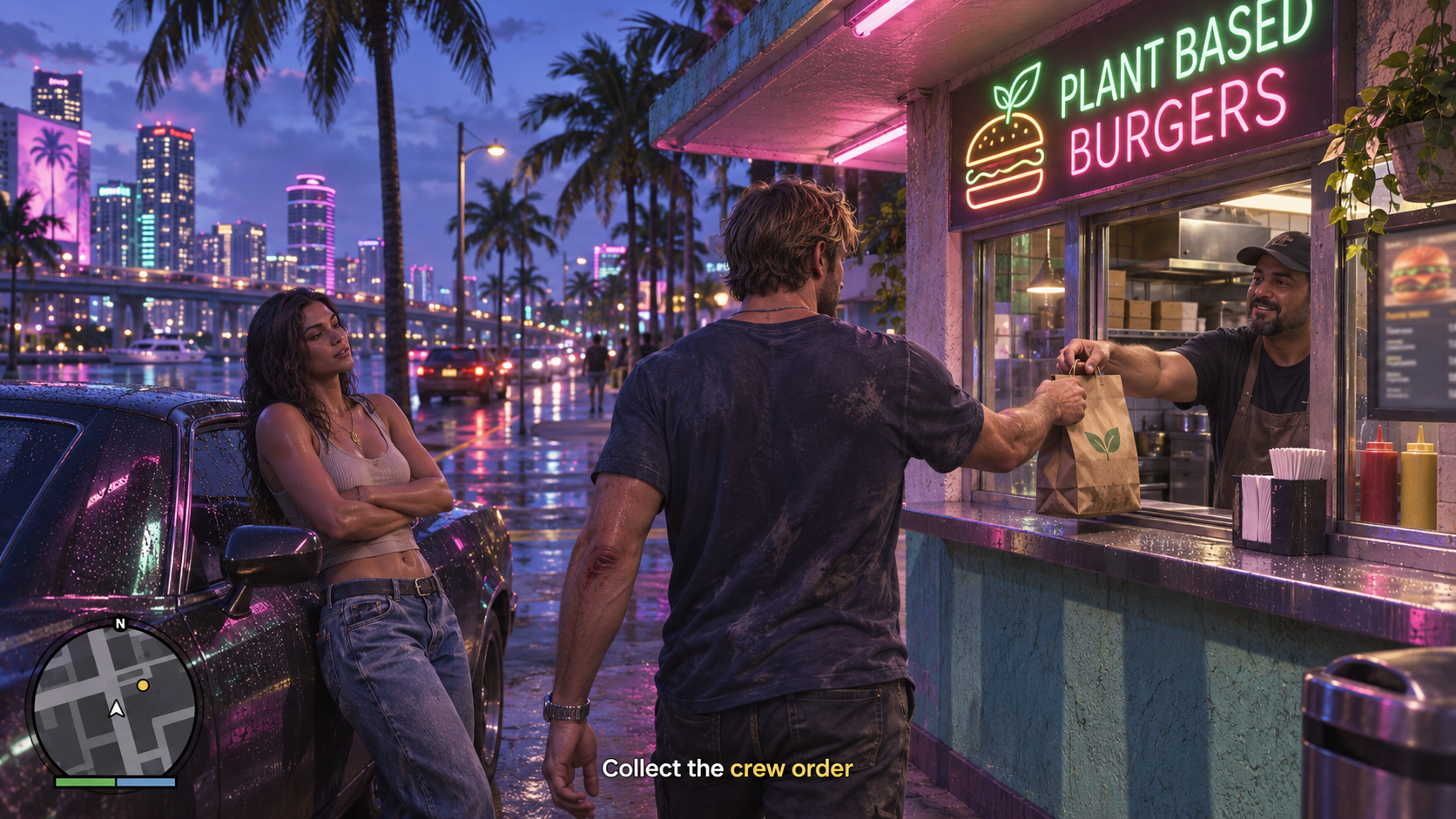
Food is folded into the same preparation routine. Crew orders include dietary preferences, and getting them right improves readiness. A plant-based takeaway becomes a convenient stop because its owner knows one of the contacts. I initially bought whatever restored the most health and was surprised when Lucia asked which bag contained Ellis’s lunch. I’d eaten it during the drive.
The vegan options are useful because almost everyone can eat them, which reduces the number of stops before a job. The game explains this once through a conversation and then, less helpfully, several more times through failed orders. Removing the cheese from a burger doesn’t deal with the beef. I knew this before Jason knew it, and having to turn the car around didn’t make the lesson more memorable. It made me learn where the takeaway keeps its rear entrance.
These moments work best when they interfere with something else. I was carrying the correct meals back to the car when a minor problem from an earlier mission found us in the parking lot. Keeping track of which bag belonged to whom became unexpectedly difficult. Ellis held his lunch throughout the escape. It was the first time I’d seen a passenger protect an object I actually wanted him to keep.
The feelings audits arrive afterward. A short debrief lets you acknowledge a concern, explain a choice, or move on. I usually answered because the conversations were reasonably good. Selecting the quickest option too often leaves an unresolved issue on the next planning screen. Mara says, “We can do the job. I just want us to agree on what happened last time.” Her delivery is calm enough that I began hearing it when I opened my actual work email.
After dark
The lighting deserves more attention than it will get between arguments about lunch. Vice City at dusk is beautiful without hiding the road in a purple blur. Light remains inside rooms when you pass them. Wet pavement looks different beneath a cheap shop sign than it does outside a hotel. I stopped on a bridge to watch the windows change along the waterfront, then had to move because somebody behind me was behaving like a real person who wanted to cross a bridge.
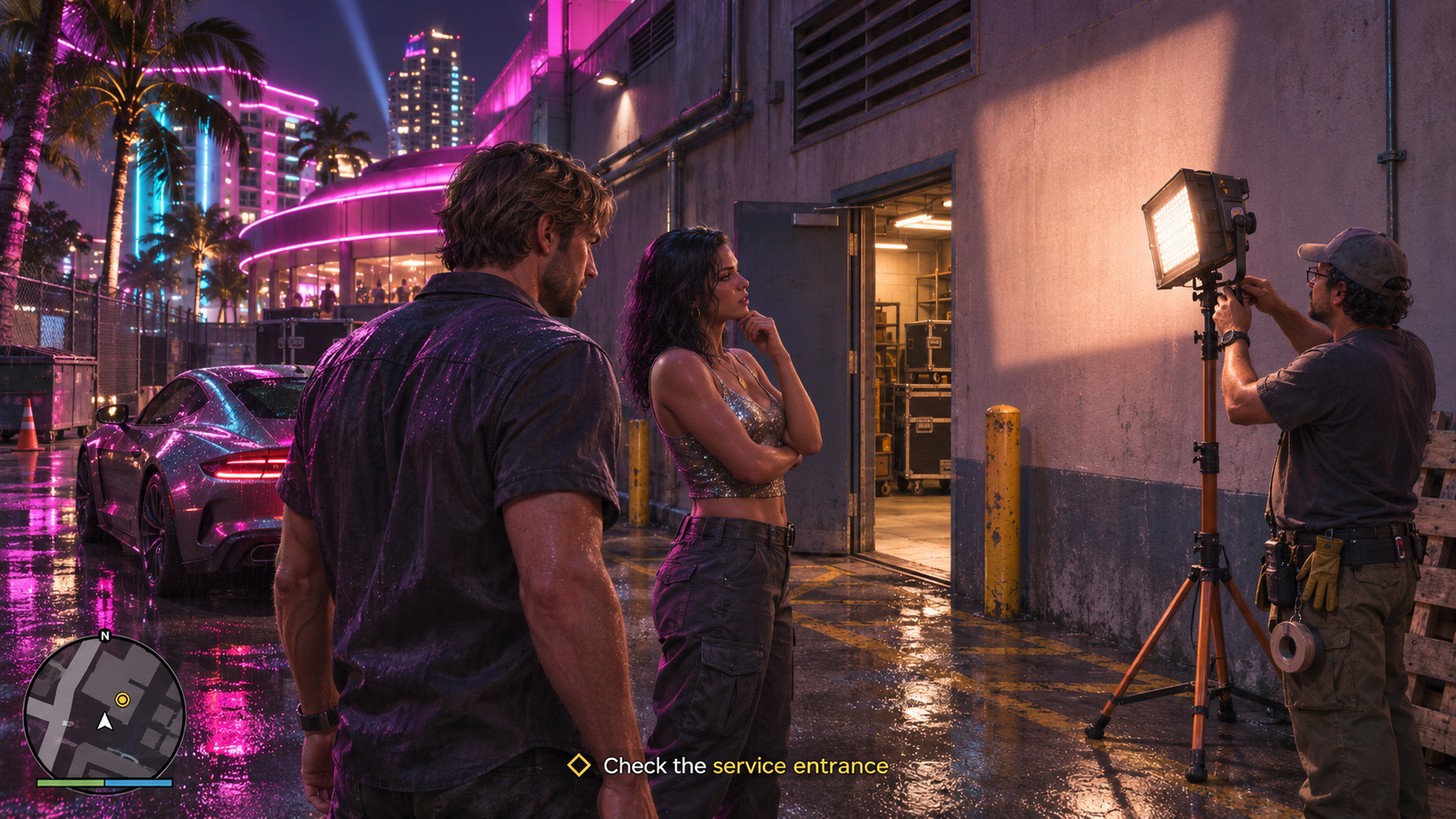
Interiors are even better. A nightclub looks persuasive in the uncomfortable period before it opens, when half the lights are off and staff are moving things that customers will later assume have always been there. One mission asks you to inspect the place before it becomes a business contact. You check the staff entrance and follow the manager through a space that makes less sense from this side of the doors. It’s a good use of a familiar kind of location.
The accessibility walkthrough is brief and mostly practical. A ramp is blocked by something that can be moved. The manager says he’ll move it, then sends a message asking if you can move it. I expected the job to end there. Instead, Lucia notices that the route leads to a locked door. The manager has a key somewhere. By the time we found it, I understood why the person who’d complained hadn’t accepted his assurance that there was technically a ramp.
A later casino preparation mission brings in a lighting consultant. The security cameras make this sound sensible. You need to know which areas can be darkened and what stays on when the main power goes down. The consultant takes readings by the pool while Jason becomes increasingly concerned that someone will notice him taking readings by the pool. The consultant asks Jason to stop standing in the spot being measured.
The report identifies a small amber pool light that comes on when an NPC feels uncomfortable. I’d noticed the light during an earlier visit and assumed it was decorative. After the report, I watched it change when Jason stood too close to a man waiting for a drink. Moving away turned it off. The man never looked up. I spent several minutes testing the radius before Lucia asked whether I’d finished casing the building.
This is the kind of detail that will occupy a certain player for days. It also creates a strange problem during the heist. The obvious route passes the pool, and frightened people make the lighting less predictable. I retried that section twice before realizing I could take a longer corridor and avoid everybody’s discomfort entirely. The consultant had marked it on the plan. I hadn’t read that page.
Second chances
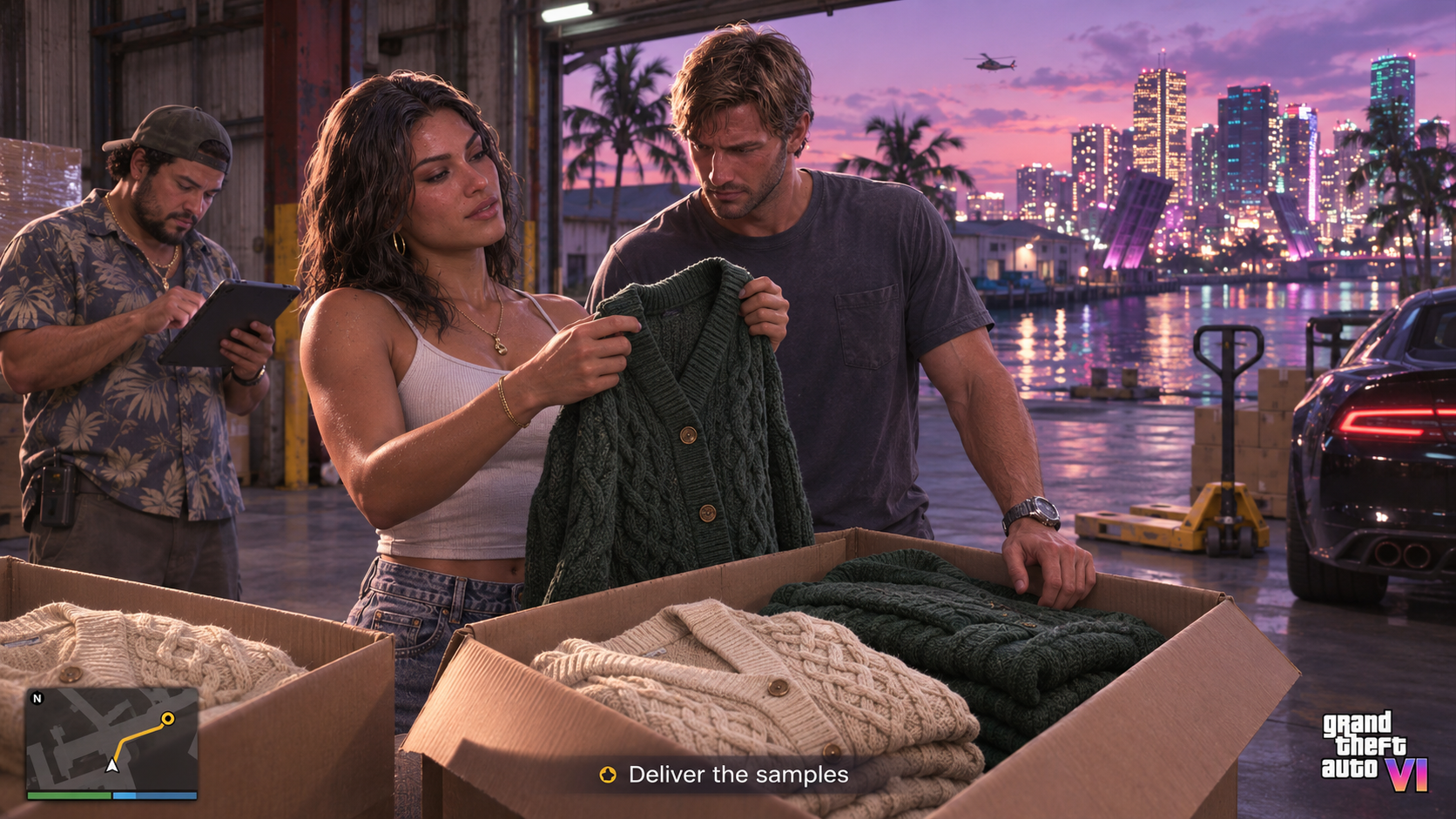
Gloria calls again around the middle of the campaign. Her knitting club needs help with a delivery. By then I’d largely forgotten about the gray cardigan, although Lucia is wearing it when she answers the phone. The mission, Second Chances, starts with a van and a collection of boxes that take slightly too long to load. Gloria has found a buyer for the club’s work and wants to make a good impression. It’s an ordinary favor until the van is followed.
The chase is one of the better smaller sequences. There’s no grand introduction to the people behind you. You notice the same car twice, Lucia notices it once, and the delivery route becomes something else. The van handles badly enough to make every turn a choice. I lost the pursuers, arrived with a damaged rear door, and was told that one of the boxes had opened. Gloria wanted to know whether the cardigans were all right.
They were. That mattered more than the van.
The buyer turns out to be paying a remarkable amount for each one. Nobody says much about this at first. Gloria explains that prison-made knitwear has a story people respond to, and the purchaser likes supporting second chances. Jason asks how many second chances the purchaser is buying. The answer is enough to make the next robbery feel poorly compensated.
From here, the club becomes a business you can develop between larger missions. Orders arrive with deadlines. You collect yarn, arrange transport, and find somewhere dry to keep the finished work. Initially this feels like a welcome variation on the usual property loop. A room above a small shop fills with shelving. People you’ve helped begin working there. I enjoyed returning to see that a place I’d paid for had become a place somebody actually used.
Then the money stops matching the sweaters. An order for twelve arrives with payment for four hundred. Gloria says the client is investing in the program. A later delivery involves cardigans that never leave their boxes before being sold again. Lucia understands what’s happening before Jason does, and the game gives her a lovely look when he proposes fixing the inventory records. She asks him whether the records are the part he thinks is broken.
I expected a familiar business-front story. What I didn’t expect was the amount of genuine knitting required to keep the front credible. You can hire people to handle it, but Gloria refuses to let standards slip because the accounts are strange. A cardigan is returned for having one sleeve longer than the other. The return holds up a payment we need for equipment. I went to a yarn shop with a more immediate sense of purpose than I brought to several armed confrontations.
The club also inherits the crew’s policies. A new supplier is rejected because the yarn’s origin can’t be established. We switch to a vegan fiber that costs more and needs different handling. Lucia approves the change. Jason asks whether the police will care what the sweaters are made of. Gloria says she’d prefer not to disappoint the customers we have now in the hope of pleasing the police later.
At this point I’d bought shelves, hired a courier, and completed a short procurement assessment to keep laundering money through a rehabilitation project. The game continued to give me perfectly conventional missions outside the shop. I kept postponing them because a hotel chain had expressed interest in an order and I wanted to see how badly that could go.
The application
It goes badly in an unusual way. The hotel wants enough cardigans to require a larger workspace. A contact suggests applying for municipal support, since the club now employs people the city would like to describe as a success. Lucia tells Jason to read the eligibility requirements. He says they’re a criminal operation. She tells him to read them anyway.
The next stretch involves making the business look respectable by actually operating it respectably. Wages need to be recorded. Workers get breaks. A woman from the city visits and asks where the fire exit goes. I’d seen the question earlier at the nightclub and felt a small, unpleasant recognition. We moved the boxes. The woman came back and checked. Our application advanced.
There’s tension here that I didn’t expect to enjoy. Every improvement makes the front more convincing and the business more difficult to use as a front. A new employee asks why a large payment has no corresponding order. Jason can invent a customer, blame an accounting error, or offer to discuss her concern in a feelings audit. I selected the audit because I assumed it would buy time. She brought the accounts to it.
Mara chairs the meeting. This is where the writing finally makes her patience threatening. She doesn’t accuse anybody of anything. She asks Jason to repeat what he understands the concern to be. The player knows the answer, Jason knows the answer, and selecting it is still somehow worse than losing the money. I sat over the dialogue options longer than I spent choosing the route into the casino.
The resolution depends partly on how you’ve treated the people around you. In my run, the employee suggested a way to separate the club’s genuine trade from the payments that were arriving for other reasons. It took another mission, an expensive interruption, and an apology Jason delivered without sounding entirely convinced he should. Gloria was furious about the delay to the hotel order. We’d protected the business and jeopardized the cardigans.
By the time the grant arrived, the game had persuaded me to care about a room full of adults meeting a knitwear deadline. I could have spent the money on a car. I bought another van because the courier kept explaining how much time a second vehicle would save. Ellis drove it to the shop, looked at the loading area, and asked whether we had somewhere to eat. I knew the answer to that one.
Verdict
There are still too many repeated conversations, especially after a failed mission sends you back through a preparation scene you’ve already understood. The crew menus would benefit from clearer explanations of what changes a relationship and what merely changes a number. I’d also like Jason to pick up a bag without first considering whether I meant the chair beside it. These are ordinary frustrations in a game that finds plenty of less ordinary ways to occupy an evening.
I finished the main story wanting to spend more time in the city. Some of that is the driving. Some is Lucia, whose habit of letting Jason finish a bad idea before answering it remains funny much longer than it should. Mostly, I wanted to return to places that had acquired a history through things I’d done badly. The takeaway has a difficult parking lot. The casino has a corridor I trust. The shop has a door that must remain clear.
Nine out of ten. I’ve completed the campaign, bought the car I wanted, and started clearing the remaining jobs. Gloria has a new order and needs a decision on the buttons before she can send it to production. Mara would like to know whether the score reflects everyone’s contribution. I gave the courier the van keys and went back inside.