National Pride: Australia Backs Kangaroo Boxing Bid For Brisbane 2032
The proposed Olympic discipline would pair trained athletes with adult male kangaroos in a regulated format built around ring control, veterinary clearance, and Queensland confidence.
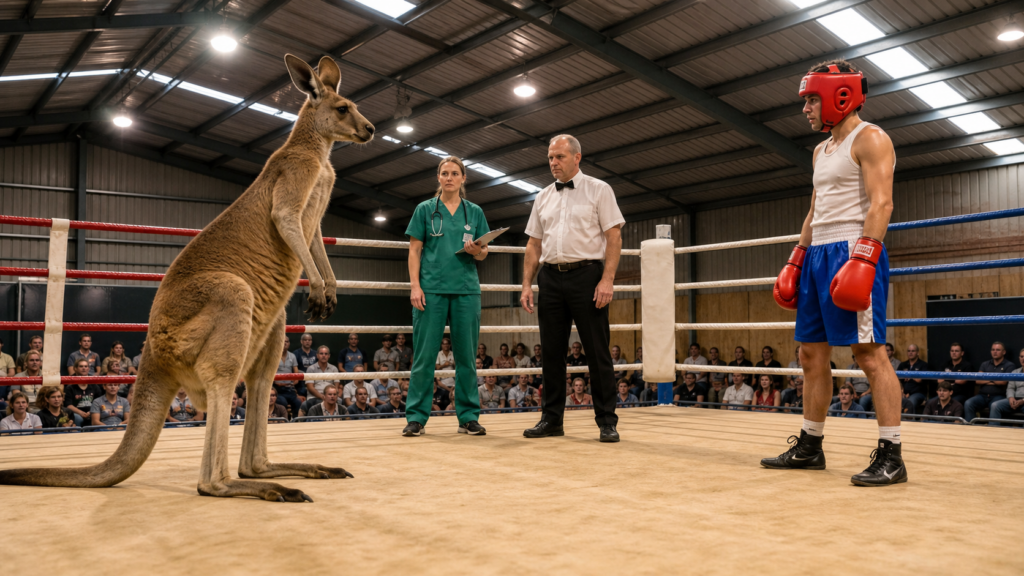
Australia’s push to add a distinctively local sport to the Brisbane 2032 Olympic Games has taken a major step forward, with organizers formally backing kangaroo boxing as a proposed demonstration event.
The bid, led by Kangaroo Boxing Australia in partnership with several regional sporting bodies, would see trained athletes enter the ring against adult male kangaroos in a regulated three-round format designed to showcase Australian athleticism, wildlife heritage, and the country’s long-standing willingness to pretend a bad idea becomes respectable once it has a governance framework.
“This is not a novelty act. This is a high-performance combat discipline with deep roots in the national imagination,” said Kangaroo Boxing Australia chair Warren Bell, standing beside a roped-off training enclosure at a pilot facility outside Ipswich. “The world already associates Australia with kangaroos, boxing, bravery, and men in polo shirts explaining why something is perfectly safe. Brisbane 2032 gives us a once-in-a-generation chance to bring those pillars together.”
Under the proposed rules, human competitors would wear standard amateur boxing headgear and 12-ounce gloves, while kangaroos would compete ungloved but subject to strict tail-placement regulations, mandatory veterinary clearance, and a two-warning system for excessive leaning. Bouts would be scored by three judges on clean contact, ring control, evasive movement, and the athlete’s ability to leave the contest with the same number of ribs listed on their accreditation form.
Organizers said early testing has already produced strong results, particularly among former rugby league players, regional personal trainers, and men named Brayden who describe themselves as “pretty good with animals” despite overwhelming evidence from the footage.
“Kangaroo boxing rewards patience, balance, timing, and a very realistic understanding of what a marsupial can do with its legs,” said national performance director Elissa Tran. “A lot of new athletes come in thinking they can crowd the roo, work the body, maybe steal the first round. Then the roo posts up on its tail and explains Australian sport to them in one movement.”
The Brisbane proposal identifies three Olympic pathways: men’s, women’s, and mixed open paddock, with weight divisions still being finalized after officials admitted that asking a kangaroo to make weight had created “several avoidable misunderstandings” during the national trials. A separate junior development program has been suspended until administrators can agree on whether a 19-year-old human being repeatedly punched by a wallaby counts as grassroots participation or a regional health issue.
Queensland officials have embraced the bid as a potential legacy sport, noting that kangaroo boxing would require minimal new infrastructure beyond existing showgrounds, emergency departments, and the type of temporary fencing already used when a music festival loses control of the VIP area.
“This is exactly the kind of Queensland-first thinking Brisbane 2032 should be known for,” said deputy venue legacy coordinator Martin Keane. “Other hosts can build expensive velodromes. We can put a ring in Toowoomba, bring in a kangaroo with media training, and create a global broadcast moment where the host nation wins bronze because its athlete survived to the bell.”
Animal welfare protocols are expected to form a central part of the IOC submission. Kangaroos would be limited to one bout per competition day, provided shaded recovery areas, and allowed to withdraw from a match by either leaving the ring or making sustained eye contact with an official until the official remembers where they are and what they have helped create.
Bell said the sport’s critics misunderstand the relationship between athlete and animal, which he described as “mutual respect, elite movement literacy, and occasionally a qualified dentist.” He also rejected suggestions that Australia was leaning too heavily on wildlife branding, arguing that every host nation tries to put its cultural stamp on the Games.
“Japan had karate. France had breaking. Los Angeles has every sport that can be filmed beside a sponsor wall,” Bell said. “Australia deserves the same opportunity. If we cannot welcome the world to Brisbane by watching a middleweight accountant from Finland get measured by an eastern grey with championship footwork, then frankly the Olympic movement has lost its courage.”
Training camps are expected to begin across Queensland next year, with selectors prioritizing athletes who demonstrate composure, foot speed, and a proven ability to follow instructions shouted by a veterinarian from behind a ute.
At press time, Kangaroo Boxing Australia was also lobbying for a Paralympic pathway, though officials admitted the classification system became complicated once several able-bodied trialists completed a single sparring session and immediately qualified.