Federal Budget Reveals Australians Technically Still Rich If You Ignore Everything They Spend Money On
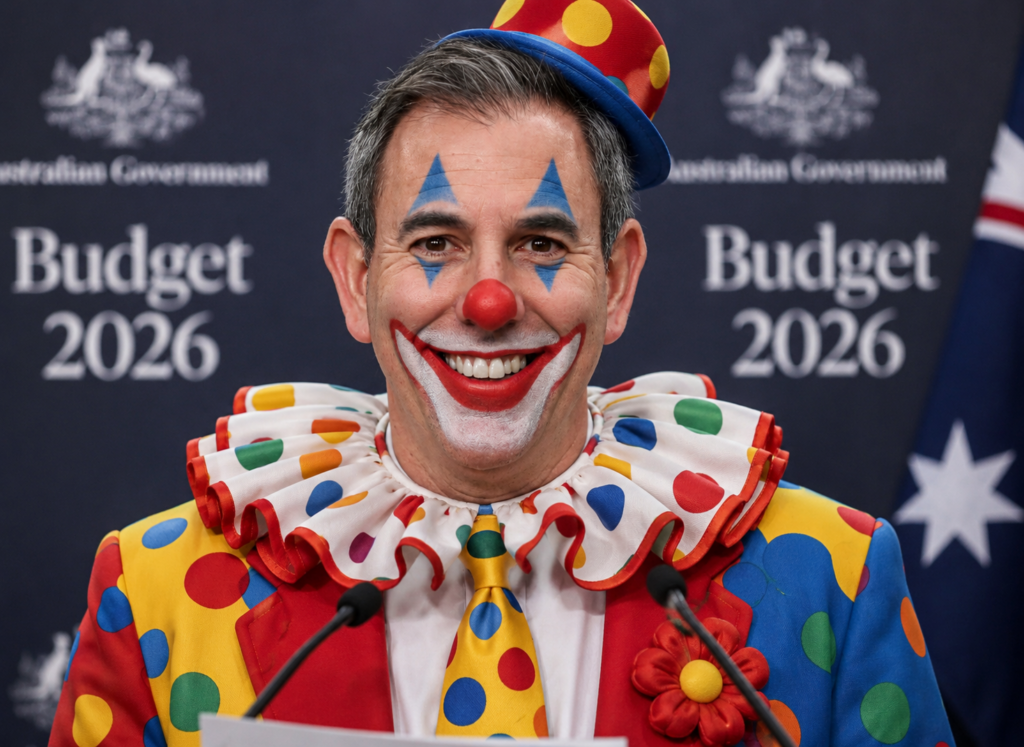
CANBERRA — Treasurer Jim Chalmers unveiled the 2026 federal budget Tuesday night, confirming the Albanese government’s bold new economic strategy of giving Australians $14 while quietly watching every essential living expense evolve into a medieval punishment ritual.
The budget includes fresh tax cuts, housing reforms, energy rebates, and infrastructure spending, all carefully calibrated to create the brief emotional sensation of relief moments before your landlord increases rent another $180 a week because a new café opened nearby.
“This budget delivers meaningful cost-of-living support,” Chalmers said, while somewhere in western Sydney a family of four split a single capsicum three ways.
Under the new tax plan, average Australians are expected to save several hundred dollars annually by 2027. Treasury modelling predicts this will allow working families to finally afford premium luxuries such as having both headlights repaired or purchasing strawberries without whispering holy shit.
The government also announced expanded energy rebates, which experts say should reduce household electricity bills from “psychologically devastating” to “deeply disrespectful.”
“Without intervention, some Australians were at risk of turning their heaters on,” said Energy Minister Chris Bowen. “We simply couldn’t allow that.”
The housing package includes billions for infrastructure and reforms to negative gearing concessions aimed at improving affordability for younger buyers.
The announcement immediately triggered panic among property investors, many of whom spent the evening posting grainy black-and-white Instagram stories comparing themselves to persecuted farmers during the Soviet famine.
“This country hates success,” said Melbourne investor Grant Tully, who currently owns eleven investment properties and one child. “I worked hard for these homes. Well, technically the tenants worked hard. But emotionally, this has been very difficult for me.”
Meanwhile, first-home buyers reacted positively to the reforms after learning they may soon only need a $200,000 deposit instead of a $240,000 deposit.
“It’s nice to finally have a pathway into the market,” said 32-year-old nurse Rebecca Hall while attending a rental inspection alongside 480 other applicants and a German shepherd named Steve.
Treasury officials insist inflation is easing, despite Woolworths now requiring customers to undertake a credit score check before approaching the cheese section.
Financial analysts say grocery prices have stabilised somewhat, although economists define “stabilised” as “your weekly shop no longer increases by the GDP of Peru every fortnight.”
Australians have reportedly adapted well to changing conditions, with millions now using Afterpay for groceries in what economists call “a dynamic restructuring of shame.”
“I just split my bananas into four interest-free payments,” said Brisbane father Daniel Kerr. “That gives me enough liquidity to maybe look directly at a watermelon this quarter.”
The budget also includes billions in defence spending amid rising global tensions, ensuring Australia remains prepared to participate in future geopolitical conflicts despite most citizens currently being unable to afford Kettle chips.
Defence officials confirmed Australia’s next generation of submarines should arrive sometime shortly after the ocean itself becomes uninhabitable.
The government defended ongoing deficits by arguing responsible economic management requires balancing inflation pressures against household pain, investor confidence, productivity concerns, labour shortages, energy transitions, housing supply constraints, and the increasingly fragile mental condition of every Australian walking through a Coles.
“This is a carefully targeted budget,” Chalmers said. “We are providing relief without adding inflation.”
Economists later clarified this translates roughly to: “You will continue suffering, but with slightly more PDFs explaining why.”
At press time, millions of Australians were celebrating the budget by treating themselves to the reckless financial extravagance of buying name-brand olive oil.