Good News: After Cookie Consent Banners Went So Well, The European Union Is Brainstorming More Tiny Choices For The Whole Internet To Make Before Doing Anything
The bloc believes users have almost forgotten how grateful they are for being asked 19 times a day whether they want websites to work.

Every so often, a public institution gives ordinary people a gift so subtle they close it instinctively before understanding what it was. Great news for anyone who enjoys earning the right to read a paragraph: After the runaway success of cookie consent banners, the European Union is brainstorming new ways to make the entire global internet pause, squint, and ask whether rejecting all applies to partners or legitimate interest.
Finally, Brussels is back in the lab.
According to materials prepared for the European Commission’s Working Group On Respectful Delay, officials are studying a new family of online prompts designed to expand the civic thrill of clicking “manage options” into every corner of modern life. Proposed ideas include a quarterly device relationship check, a mandatory browser pre-departure warning before opening any PDF, and a 17-step personalized font consent journey for users who wish to view text in something other than the website’s default sans serif.
“The cookie banner taught us that consent is most meaningful when a tired person trying to check a train time has to read the word ‘vendors’ before breakfast,” said Marlies Van Rooij, deputy coordinator for user autonomy nudges at the Directorate-General for Communications Networks, Content and Technology. “We now believe Europeans, and also everyone else on Earth, deserve that same quiet dignity across weather apps, restaurant menus, parking meters, hotel photo galleries, and the button that says ‘continue.'”
Van Rooij added that early prototypes have been “extremely promising,” with test users abandoning a simple recipe search after only six prompts, two sliders, one expandable accordion, and a final question asking whether necessary vibes should remain active for 30 days or until the next full moon.
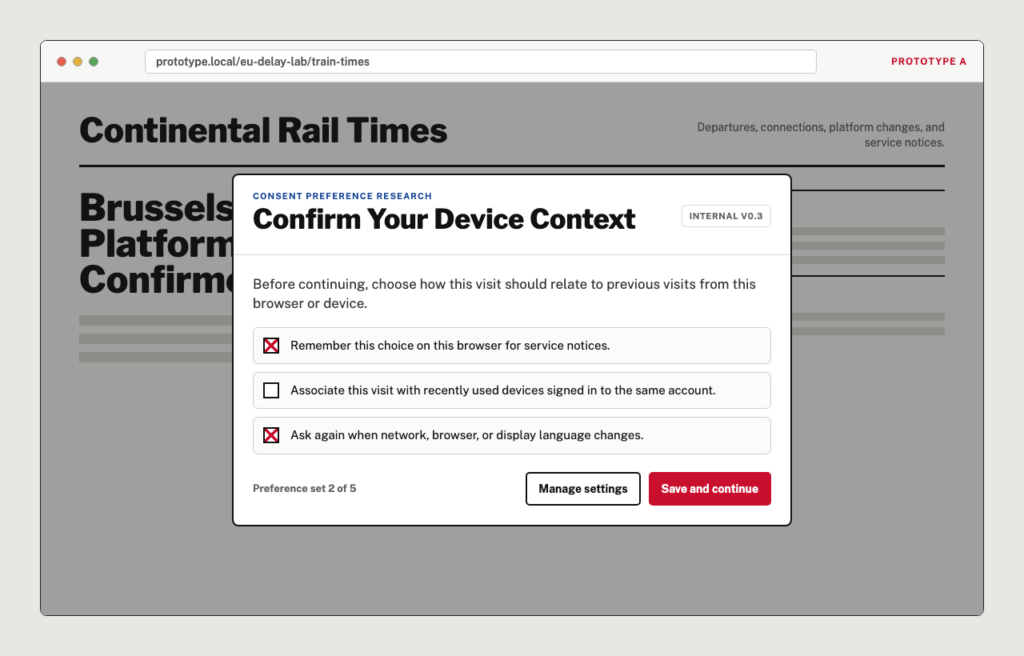
The most popular proposal so far is the Confirm Your Device Context window, which would appear whenever a user visits a site from a new location, old location, current location, private tab, work laptop, smart TV, airport Wi-Fi, kitchen iPad, or phone that briefly fell between the car seat and center console. To continue, users would be asked to review how the visit relates to previous browsing activity, nearby sessions, and the continuing legal status of being a person with too many chargers.
That feels fair. The internet has been letting people look at soup recipes with nowhere near enough self-knowledge.
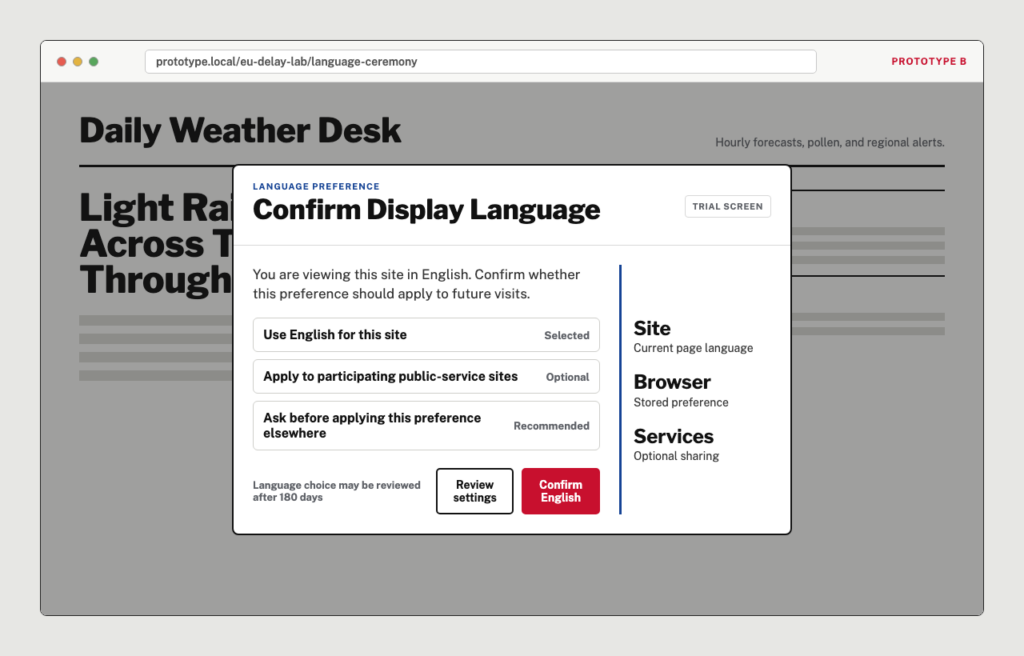
Commission staff are also reportedly excited about a language preference remembrance ceremony, a short browser ritual requiring users to confirm they would like to keep reading in English despite having previously done so for the last 11,204 pages. Other concepts include a global newsletter refusal registry, a five-second reflection period before rejecting push notifications, and a small pop-up that asks users if they understand that closing the pop-up may reduce the pop-up’s ability to know whether it has been closed.
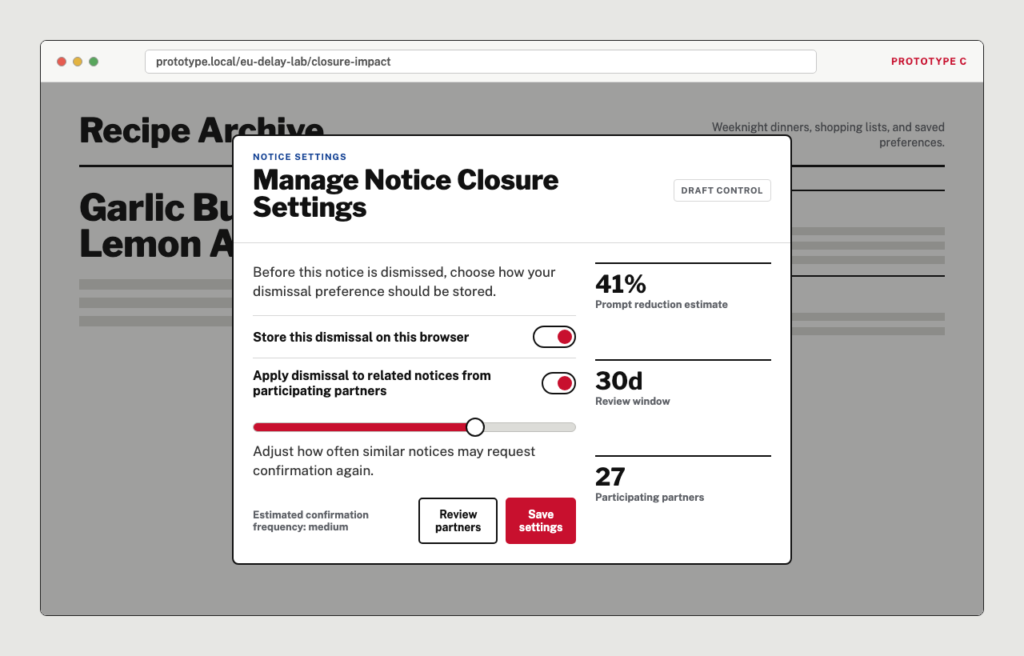
Consumer groups praised the effort, saying internet users have spent too long recklessly reaching information without first making a meaningless administrative choice in a gray rectangle.
“For years, ordinary people have opened websites and simply seen the thing they came for,” said Pieter De Smet, policy director at the Brussels-based Center for Accountable Clicking. “That kind of frictionless access might feel convenient in the moment, but it robs citizens of the deep democratic satisfaction that comes from hunting for a smaller button.”
Nice to see someone still looking out for the little guy by making him click through a modal before learning what time the pizza place closes. Have you been meaningfully empowered by a banner while trying to buy socks? Let us know once you locate the reject all button.