AI Bubble Pops, Nation Forced To Remember How Anything Works

SAN FRANCISCO – Global markets entered freefall Monday after investors abruptly realized that artificial intelligence companies were losing approximately $14 for every $1 generated, triggering the largest economic correction since the discovery that NFTs were just pictures of monkeys.
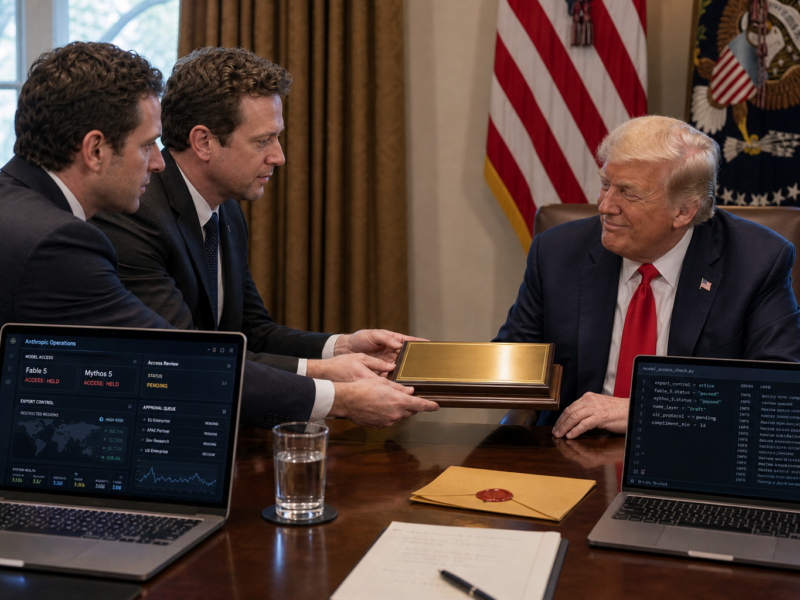
The collapse began after analysts at Morgan Stanley accidentally opened the “Expenses” tab on a major AI startup’s internal spreadsheet. Within minutes, panic spread through Wall Street as traders discovered the entire industry was primarily converting electricity into investor presentations.
By market close, more than $11 trillion in AI valuation had evaporated, wiping out hundreds of companies whose business models largely involved adding the phrase “powered by AI” to software that already existed.
The NASDAQ AI Index fell 96 percent after one startup admitted its revolutionary autonomous research agent was just expensive calls to Anthropic’s Mythos AI model.
Silicon Valley reacted immediately. Thousands of startup founders were seen wandering Palo Alto in Allbirds and quarter-zips asking strangers if they would still be interested in “a disruptive platform for thought leadership.”
Outside the former headquarters of SynthMind AI, recently unemployed engineers gathered around barrel fires fueled by unused Nvidia GPUs while recruiters handed out pamphlets titled So You Accidentally Majored In Prompt Engineering.
“It’s scary,” said former Senior Prompt Architect Lena Wu, staring blankly at a closed Sweetgreen. “Two weeks ago I was making $480,000 a year teaching a chatbot to sound more empathetic during customer refund requests. Now LinkedIn says I may qualify for work in municipal parking enforcement.”
As the bubble burst, the broader economy began adapting to a post-AI reality with alarming speed.
Entire industries that had spent years replacing humans with unreliable automation suddenly found themselves scrambling to rehire the exact workers they publicly called obsolete. Klarna reportedly attempted to reassemble its customer service department after discovering its AI support bot had approved 14,000 mortgage applications for dogs.
“We may have moved a little aggressively,” admitted Klarna CEO Sebastian Holm during a press conference interrupted repeatedly by customers receiving legally binding loan approvals from a Labrador named Kevin.
Meanwhile, universities announced emergency curriculum changes after realizing half their business students had spent four years learning how to “leverage AI synergy ecosystems” instead of acquiring usable skills.
Stanford unveiled a new accelerated trades program called Coding Was A Phase, offering former machine learning students crash courses in plumbing, forklift operation, and maintaining eye contact during conversations.
Across the Bay Area, abandoned AI offices were rapidly converted into Spirit Halloweens, luxury dog spas, and emotional recovery centers for venture capitalists.
“We’re seeing a massive psychological adjustment,” said economist Dana Mercer. “For years investors believed AI would replace doctors, lawyers, artists, teachers, and software engineers. It turns out it mostly replaced interns writing emails nobody reads.”
The human cost has been severe. Former AI influencers who built personal brands around “the future of exponential cognition” are now posting shaky Instagram videos explaining how to grow tomatoes in studio apartments.
Several prominent tech podcasters were forced to take part-time jobs after audiences stopped listening to 4-hour episodes titled Is AGI Two Months Away? featuring men with microphones nodding at each other in LED-lit rooms.
“I’ll be honest,” said one former AI futurist while assembling sandwiches at a Berkeley deli. “There were moments when I genuinely believed the chatbot was conscious. In hindsight I may have confused predictive text with spirituality.”
Governments worldwide have begun stabilization efforts to contain the fallout.
Congress passed a bipartisan emergency relief package providing temporary housing for displaced founders forced to downgrade from $19,000-a-month crypto lofts into normal apartments with visible kitchen appliances.
The Federal Reserve also announced a controversial Workforce Reintegration Initiative designed to help former AI executives transition back into society slowly and safely.
Under the program, ex-founders are gradually exposed to concepts like “profit,” “customers,” and “finishing a product before announcing it.”
Not everyone is mourning the collapse.
Construction workers celebrated in the streets after learning they would no longer be replaced by a chatbot that confidently identifies load-bearing walls as “optional legacy structures.”
Teachers reported the first measurable improvement in student writing since 2022 after teenagers discovered they could no longer submit essays generated by systems that describe World War II as “a complex networking event between nations.”
Even Google appeared relieved. Hours after the crash, the company quietly removed AI Overviews from search results and replaced them with a small message reading, “Honestly just click the websites.”
At press time, former venture capital firms had reportedly begun pouring billions into an exciting new emerging sector called “companies that sell actual things.”