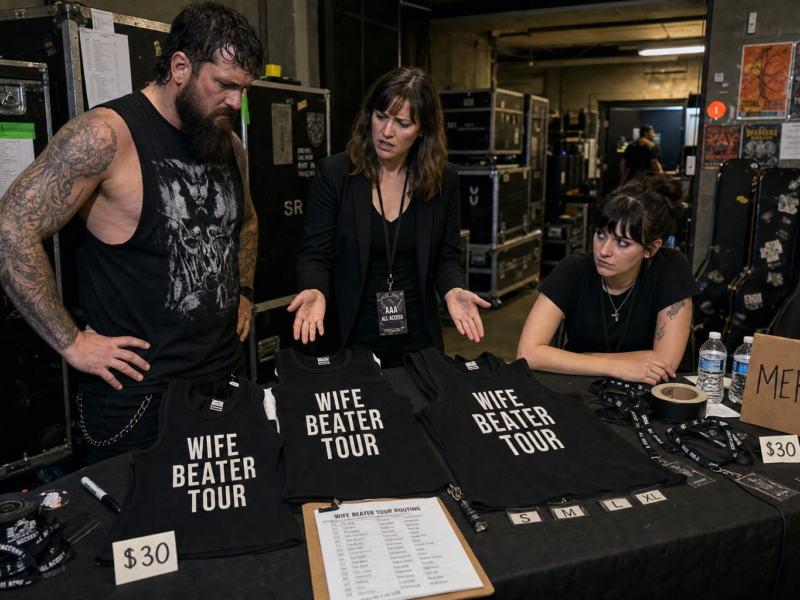
Metal Fan Called Before Council Of Other Men In Black Shirts
A man who bought a shirt because it looked good must now explain himself in the venue parking lot.
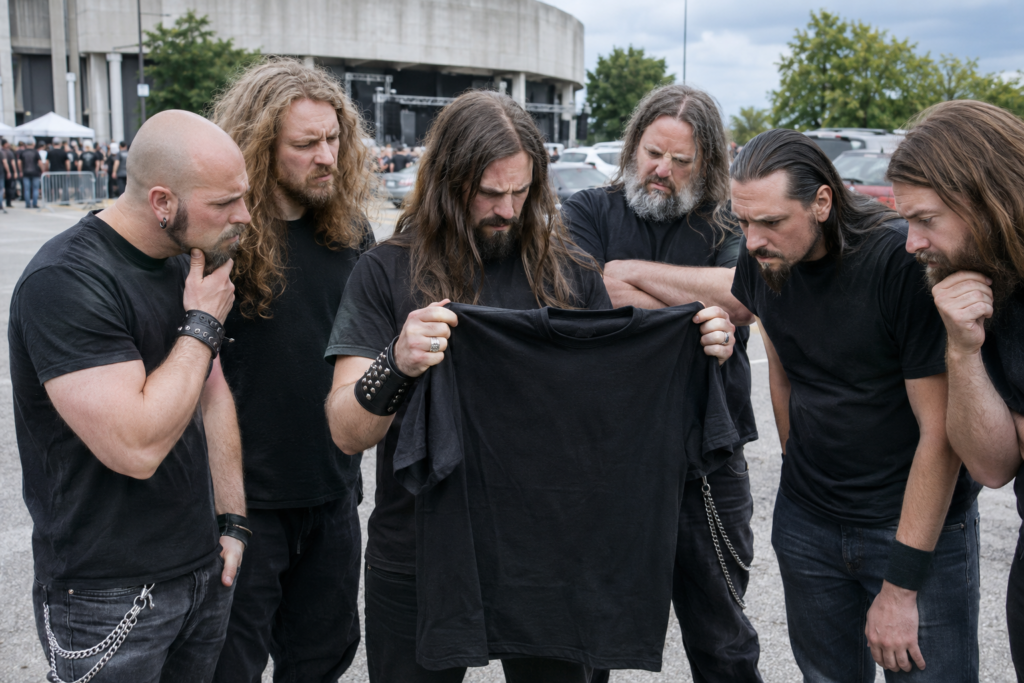
There are rules to wearing a metal shirt, and apparently one man in Cincinnati thinks they don’t apply to him. Warehouse supervisor Eric Pell, 34, has been summoned before a council of other men in black shirts after admitting he bought his because he liked the picture.
The hearing took place beside a locked dumpster behind a 600-capacity venue. Council members asked Pell to name three albums, then objected when he named three albums because one was a live release.
“Nobody’s gatekeeping,” said council chair Vince Ruggiero, who had positioned his body between Pell and the door. “We’re just having a normal conversation where he has to prove he should be here.”
Pell had bought the shirt from the band’s own merchandise table. Council members said that established a transaction, which was different from a relationship. He produced the card receipt anyway. Ruggiero examined it, noted that Pell had also bought a bottle of water, and asked whether the water was the main reason he’d gone over there.
Pell explained that the shirt had a big skeleton on it and had been available in his size. This prompted a 14-minute recess during which the council argued over whether the skeleton belonged to the band’s first drummer or was simply a skeleton.
The council’s rules are maintained in a group chat that nobody outside the council is permitted to read. Pell was told that genuine fans shouldn’t need the rules explained. A member named Brent then explained several rules, pausing only when another member said those rules had changed after the second guitarist left. The disagreement moved briefly into whether the second guitarist had really left or simply stopped replying.
Two members then challenged each other’s credentials. One had discovered the band through a video game. The other had purchased a reissue with the wrong mastering. Pell was asked to wait while the council temporarily divided into two smaller councils.
Pell attempted to strengthen his case by explaining that he’d enjoyed the support band. This created a separate jurisdictional problem. Two council members liked the support band, three considered them commercial, and the sixth had seen them before their vocalist could actually sing. Pell was asked which version he’d enjoyed. He said the one that had just finished playing. A member wrote something on a paper towel.
Inside, the support band’s merch seller was trying to establish why everyone who had bought a shirt was still outside. She walked over and offered the council a discount if they helped carry boxes after the show. Ruggiero explained that they were engaged in an important discussion. She asked whether any of them had purchased anything. Nobody wanted to let money distort the issue.
Inside the venue, the band’s singer was telling the crowd how grateful he was that anyone had come out. Outside, testimony continued regarding a bass player’s side project that released one EP in 2008.
“I thought the shirt would be an easy way to say I liked the band,” Pell said. “It turns out I need a different shirt for that. This one says I’m willing to answer questions about a demo the band would prefer people didn’t hear.”
The singer eventually came outside to get some air and found the council discussing his early work. He thanked Pell for buying a shirt. Ruggiero asked whether the singer understood why the purchase had raised concerns. The singer said he understood that the shirts helped pay for gas. Council members agreed that this was an unfortunate consequence of touring and encouraged him to return to the van.
Pell’s girlfriend eventually brought him his jacket and said their rideshare was here. The council granted conditional release, subject to his listening to the early material and reporting back.
An appeal was offered through a man who had once managed the band’s message board. He is no longer active online, but someone knows where he works. Pell was advised to write a short statement and avoid sounding defensive, which would be interpreted as evidence that he knew he’d done something wrong. He asked whether simply taking the shirt off would resolve it. Ruggiero said it was interesting that he was already willing to abandon the band.
He is now required to carry a second shirt showing that he respects the first shirt.