Nvidia CEO Jensen Huang Ate Noodles Through Trump’s China Trip Like Everyone Else Was A Loading Screen
The Nvidia CEO joined Trump's Beijing delegation and somehow turned semiconductor diplomacy into a noodle-shop power ranking.
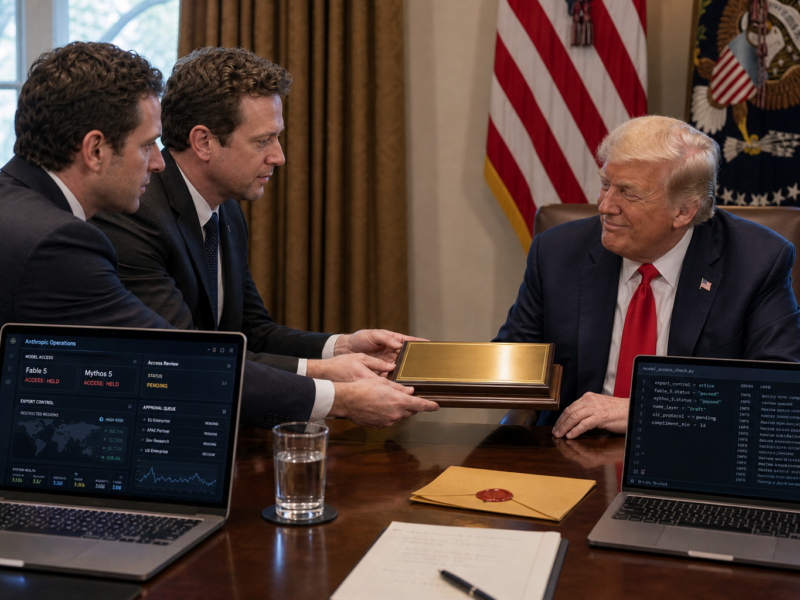
BEIJING – President Donald Trump's China trip included tariffs, Taiwan, Iran, arms sales, chip controls, and the delicate work of two superpowers trying not to blink first in public. Nvidia CEO Jensen Huang appears to have understood the assignment as: find noodles.
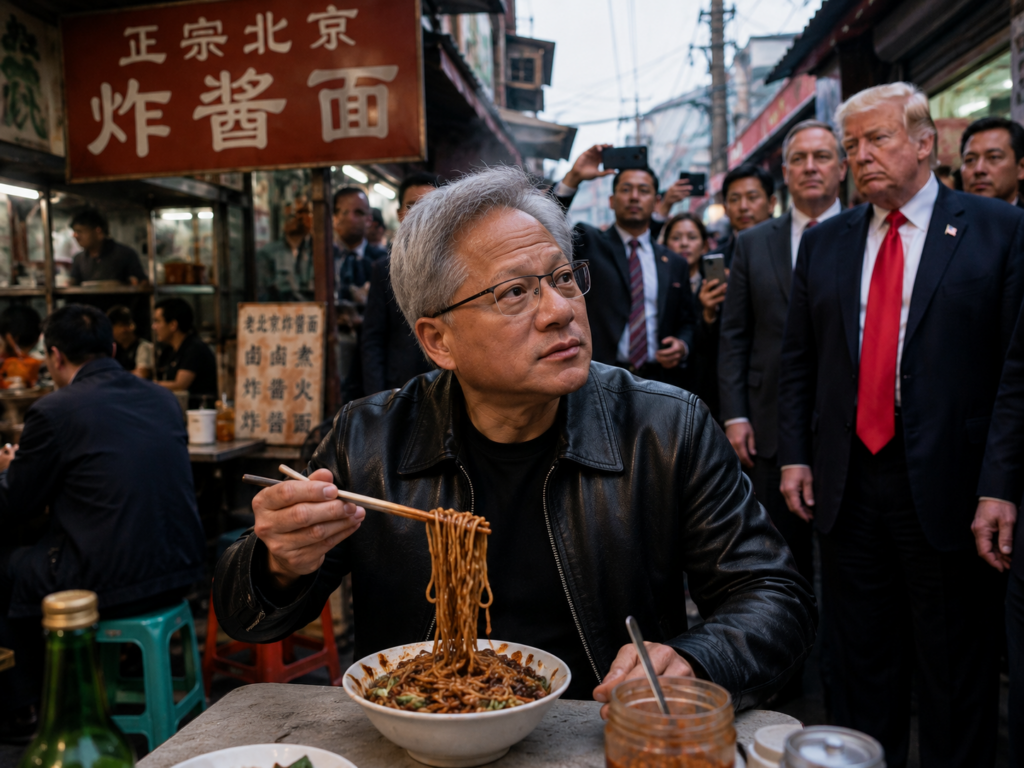
Huang, who joined Trump's delegation of American executives, was spotted at No. 69 Fangzhuanchang Noodles eating zhajiangmian while locals filmed him like he might reveal the next GPU roadmap between bites. It would have been a harmless CEO food-tour moment if every government on Earth were not also trying to decide who gets access to his company's most politically radioactive chips.
One White House aide described the scene as 'deeply inconvenient branding' for everyone except Huang, who managed to make a Beijing noodle shop look more strategically important than several marble rooms full of flags.
'The president wanted China opened up,' the aide said. 'Jensen wanted to know if the sauce came with cucumber. Both were treated as urgent bilateral priorities.'
Huang had been added to the trip late, after his name was initially absent from the executive roster and Trump reportedly brought him aboard during the Alaska stop. By the time the delegation reached Beijing, the visit had taken on the feeling of a geopolitical field trip organized around one man in a leather jacket and the magic computer bricks inside his Santa Clara vault.
The official agenda centered on trade, market access, and Nvidia's H200 chips, which U.S. officials have cleared for some Chinese buyers but which remain tangled in enough approval drama to make a customs lawyer start smoking indoors. Diplomats keep saying 'H200' in the same tone previous generations reserved for uranium, partly because 'magic computer brick' sounds unprofessional in a summit briefing.
At the noodle shop, Huang told cameras the zhajiangmian was good, then tried douzhi'er, the sour fermented soybean drink that has spent generations separating Beijing loyalists from visitors who still believe beverages should apologize. Witnesses say his face briefly resembled a chip-export attorney reading a new Commerce Department footnote.
He recovered with a sweet drink from Mixue Bingcheng, which analysts immediately described as a prudent liquidity event.
Chinese social media users treated the outing like a folk tale about a wandering compute emperor who had descended from the cloud to inspect soybean paste. One popular interpretation held that Huang was not taking a break from diplomacy at all, but conducting market research on whether AI data centers could be cooled with noodle-shop ceiling fans and public admiration.
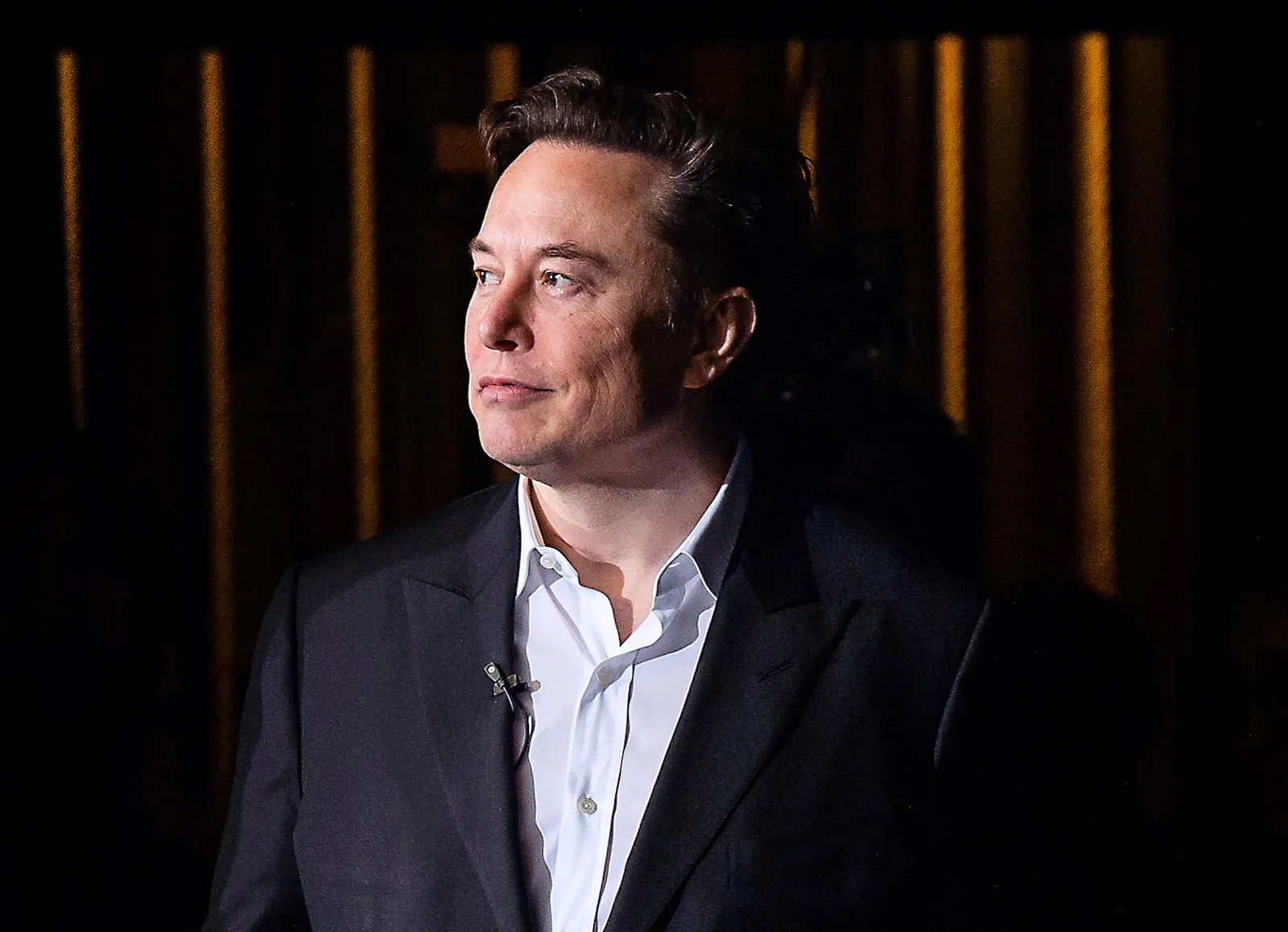
Other executives traveling with Trump reportedly struggled to match the moment. Tim Cook brought Apple discipline. Elon Musk brought whatever expression happens when a man is thinking about seven companies at once. Huang brought the power to make a bowl of noodles feel like an annex of the Nasdaq.
Security staff have allegedly grown accustomed to this problem. One minute Huang is in a bilateral meeting about semiconductor access. The next he is in a hutong holding something fermented and asking whether it scales.
'He has the calm of a person who knows every country needs him before dinner,' said Beijing technology analyst Raymond Li. 'Most CEOs seek favorable regulation. Jensen appears to seek broth.'
Markets have responded accordingly. Nvidia watchers now analyze Huang's public meals with the exhausted seriousness once reserved for Fed minutes, looking for clues in chopstick angle, jacket posture, and whether he nods before or after the first bite.
At press time, Nvidia shares were reportedly up after Huang was photographed silently studying dumplings with his hands behind his back like an emperor evaluating siege weapons, while two diplomats asked whether zhajiangmian was already covered under existing export controls.