Berkshire Tripled Its Alphabet Stake After Buffett Clicked ‘I Agree’ While Printing Dairy Queen Directions
Berkshire says it was a sober portfolio shift. Omaha sources say someone lost a fight with a Google consent banner.
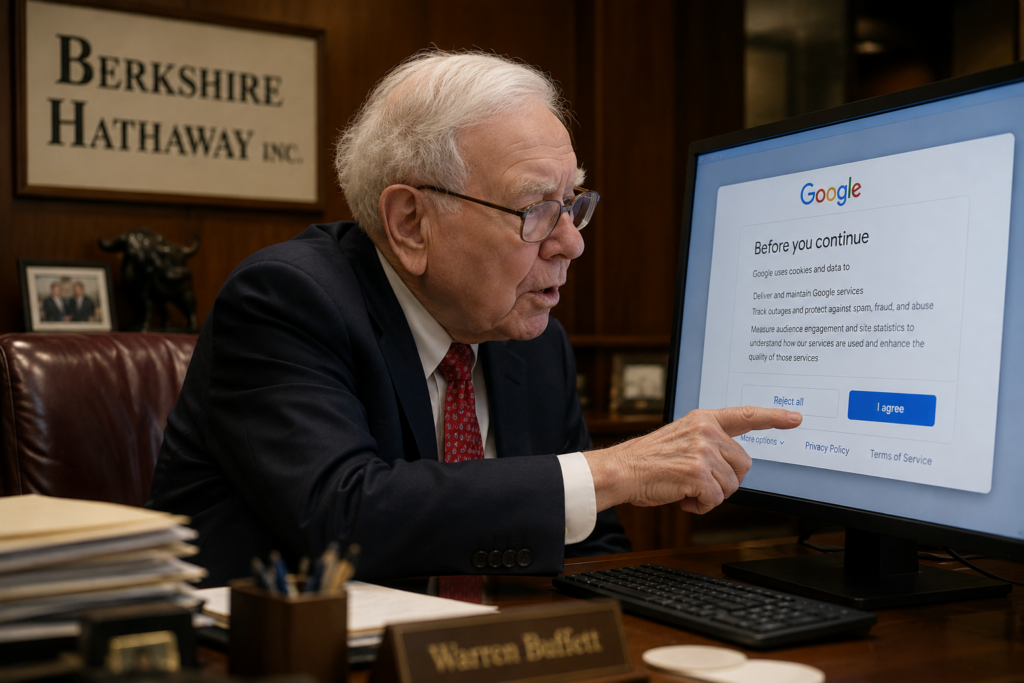
OMAHA, Neb. – Berkshire Hathaway's latest Alphabet stake was supposed to be read as a sober portfolio shift under Greg Abel. Inside Omaha, however, several employees are reportedly treating it as a browser incident that got out of hand.
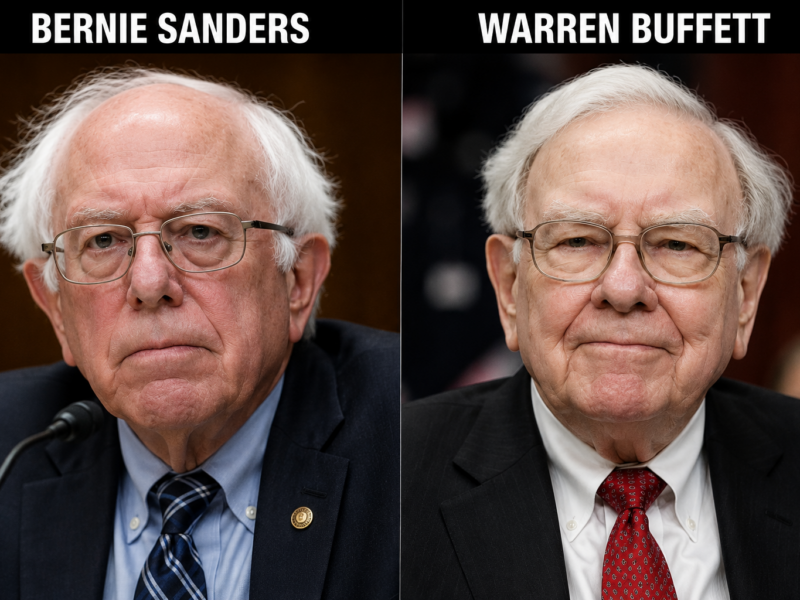
The company disclosed that it more than tripled its Alphabet holdings, giving Berkshire nearly 58 million shares worth roughly $17 billion. The official explanation is probably something involving valuation, durable earnings, and other phrases that make CNBC guests sit up straighter. The unofficial explanation is that Warren Buffett was trying to print directions to a Dairy Queen.
"Mr. Buffett wanted the address on paper, because he still believes paper has never once asked for his interests," said longtime Berkshire administrator Linda Kopec. "Then Google asked him to accept cookies, and the room changed."
According to staff accounts, Buffett became trapped in what aides described as an endless maze of blue buttons, gray submenus, and small links written by people who have never watched a 95-year-old investor negotiate with a browser. By the time anyone reached the mouse, Berkshire had allegedly opted into personalized ads, Google Workspace Enterprise, Gemini AI Premium, YouTube TV, and one of the largest Alphabet positions in company history.
"He kept asking why the computer needed to improve his browsing experience," Kopec said. "Then suddenly we owned part of Waymo."
The purchase has been interpreted on Wall Street as a sign of Abel's growing influence at Berkshire. Others close to the company believe the investment committee simply broke after attempting to decline Google prompts for several consecutive hours.
"At a certain point, the interface wins," said Wedbush analyst Martin Greene. "You go in trying to reject cookies and come out with a cloud infrastructure thesis."
Employees say Buffett initially believed Alphabet was a company that made foam letters for children and was relieved to learn it also owned Google, a search engine he described as "the machine that knows where Culver's is." The relief did not last. His first encounter with Google Docs reportedly ended after 14 colored cursors appeared in the same document and he whispered, "Too many people are inside the paper."
Since the filing, Berkshire's Omaha offices have changed in subtle but frightening ways. Beige conference rooms now contain AI strategy whiteboards. A 74-year-old insurance executive said "circle back" without irony. One employee tried to fax a YouTube link. Another printed Google Maps directions to "the cloud" and left them near the coffee machine.
Buffett remains especially suspicious of YouTube after watching one woodworking video in 2021 and spending eight months receiving recommendations titled 10 SHEDS BILLIONAIRES DON'T WANT YOU TO SEE. Staff say he now refers to the homepage as "the place where the little house men live."
The reshuffle also included exits from Visa, Mastercard, Amazon, and UnitedHealth, plus a larger position in Delta. Analysts have called it a broader strategic repositioning. Retail investors online have produced a simpler theory: Buffett likes Street View because it lets him inspect small-town Dairy Queens without asking anyone for a PDF.
"Look at this one," he allegedly told a junior analyst, pointing to a Culver's outside Peoria. "Good parking lot. Honest roofline."
Neither Berkshire nor Alphabet responded to requests for comment. Google did confirm that a user in Omaha recently searched "how stop computer asking me things permanently," followed by "print map no talking."
At press time, Berkshire had reportedly invested another $4 billion into Alphabet after an intern clicked Accept All while attempting to close a cookie banner on behalf of several board members.