I Thought Reverse Cramer Was A Sex Position
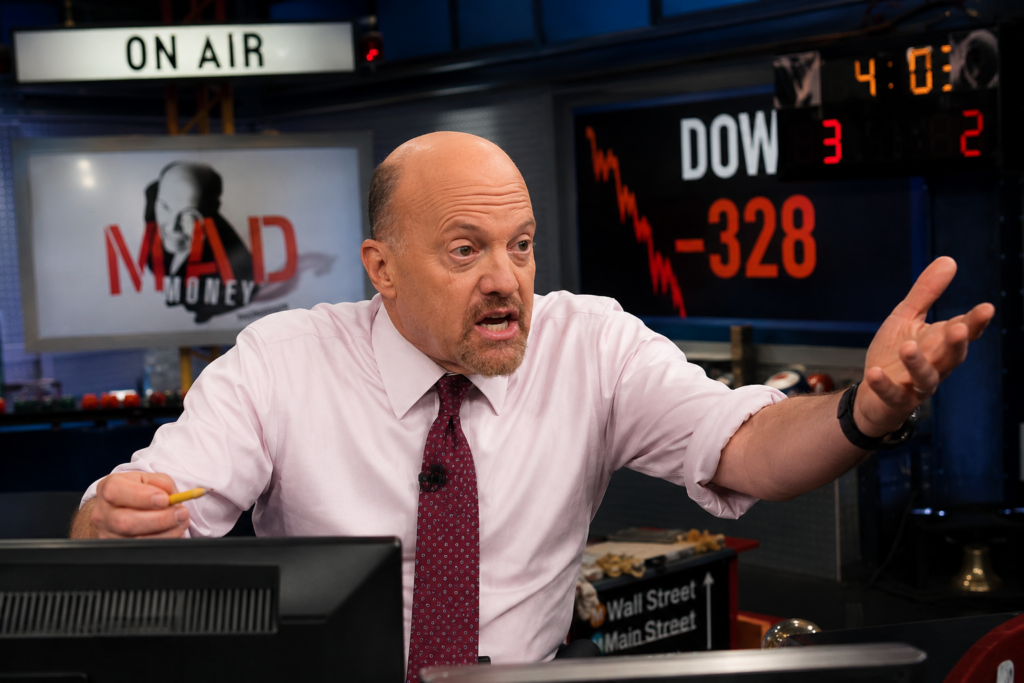
NEW YORK – For nearly two years, I believed “reverse Cramer” referred to an aggressive but ultimately disappointing sex position performed by divorced people with Bloomberg terminals.
Nobody corrected me.
That is how insulated the finance world has become from normal human society.
I first encountered the phrase at a bar in lower Manhattan after overhearing two men in quarter-zips discussing semiconductor stocks with the urgency of battlefield medics.
“You have to reverse Cramer this,” one of them said quietly.
The other nodded grimly.
At the time, I assumed they were talking about some kind of humiliating maneuver involving excessive shouting, poor timing, and a complete loss of retail confidence. Which, to be fair, still applies.
It was only later that I learned Reverse Cramer is an actual investment strategy where you simply do the opposite of whatever Jim Cramer says on television. This is apparently now considered sophisticated portfolio management.
And honestly, I respect it.
For decades Wall Street insisted investing was a complex science involving technical analysis, macroeconomic indicators, and men named Bryce explaining candlestick charts to women trying to leave parties. Then one loud television man accidentally created a perfectly inverse market oracle by being wrong in public at industrial scale.
That is innovation.
The man has achieved something economists said was impossible. He has created negative alpha so consistent that people are building entire ETFs around simply fading his instincts like he’s a drunk uncle betting NFL overs from a casino bathroom.
Financial historians will likely study this period the same way we study medieval bloodletting. Future generations will stare at clips of Cramer screaming “BUY BUY BUY” directly before a 40 percent collapse and conclude Americans briefly allowed cocaine energy to govern retirement accounts.
And yet somehow he remains employed.
Actually, “employed” undersells it. The man still walks onto television every night like a Civil War general returning from defeat number 700 to announce the cavalry strategy remains fundamentally sound.
There is something beautiful about that level of confidence.
Most people lose confidence after one bad take in a group chat. Jim Cramer could recommend investing heavily in a radioactive scooter company run by raccoons and still appear the next evening ringing a bell and yelling about cloud infrastructure.
At a certain point you stop mocking it and start admiring the durability.
The real genius of reverse Cramer is that it finally gave retail investors a simple strategy they understand emotionally.
Traditional investing advice is useless because it requires patience, discipline, and reading. Reverse Cramer requires only hatred and access to CNBC.
That’s powerful.
You can explain reverse Cramer to anybody instantly.
“Oh, so if he says buy Nvidia, you sell?”
“Exactly.”
“What if he says sell?”
“You buy.”
“What if he cries on air?”
“That’s usually bullish.”
Entire Discord groups now monitor his facial expressions like Cold War analysts interpreting Soviet missile photographs. A slight increase in forehead shine can reportedly move options markets in three sectors.
One hedge fund manager told me his firm no longer tracks earnings reports at all.
“We just wait for Jim to become emotionally attached to something,” he said. “Once he starts yelling about American innovation, we short it into the earth.”
The SEC has reportedly considered regulating reverse Cramer trading strategies but abandoned the effort after investigators accidentally doubled a pension fund within six weeks.
Meanwhile, Cramer himself appears dimly aware of what’s happening. Recent broadcasts have taken on the energy of a hostage video where the hostage is also somehow the captor.
Last month he recommended caution on a stock that immediately surged 19 percent after viewers interpreted the warning as a bullish signal. Analysts described the event as “a complete inversion of televised reality.”
One trader on Reddit claimed he no longer watches market data at all.
“I just wait for Jim to look excited about anything,” he wrote. “Then I liquidate accordingly.”
Honestly, that feels healthier than most investing strategies.
At least reverse Cramer acknowledges what the market really is now: a giant psychological escape room operated by panic addicts and AI-generated press releases.
And in a strange way, Jim Cramer may be the most honest symbol of the entire system.
A screaming man frantically hitting buttons while everyone else tries to profit from his confusion.
That’s not a broken market.
That is the market.