Orchestra Asks Audience to Pick Who Claps First
After a long pause, the people in row G are ready to leave the decision to row F.
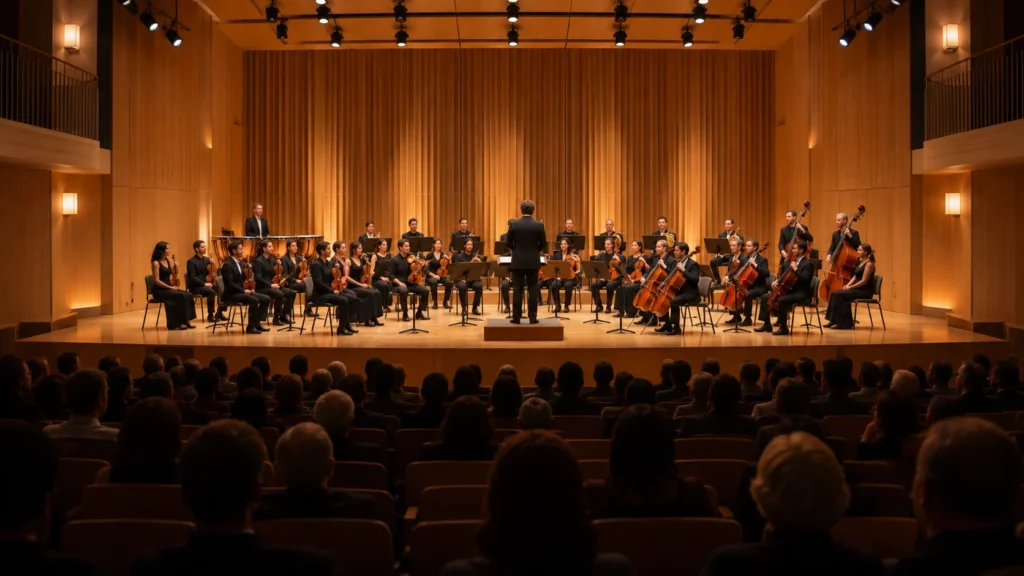
An orchestra has asked its audience to decide who should clap first, after finishing a piece with enough time to let everyone consider whether it was over.
During the pause, a man in row G moved his right hand toward his left, then realized he was holding a program. He put the program between his leg and the chair and looked at the person next to him. She was looking at the conductor, who had moved one arm and appeared to have a little more to do with the other.
The question came up at a concert where the orchestra had taken a few seconds between sections. The first time around, somebody coughed and stopped when the playing started again. The second time, a woman in the balcony heard a chair make a noise and looked around to see whether the person who’d made it was reaching for anything.
“It felt like it was time to clap once he looked at us,” said Beth Rosner, who was seated halfway back. “I would’ve liked a chance to see why he was looking at us before I did anything about it.”
Rosner’s husband had been following the program and thought he knew where they were. He had to turn it toward a light to find the listed sections and put a hand on the edge of the page while he read. Rosner asked whether he could tell from the list what it sounded like at the end. He said he could tell where they were on the list only after he heard what the end sounded like.
The orchestra has seen its audiences get through this before. A person in the front who knows the piece can be a great help, although it is useful to be able to see whether she liked it before deciding if the movement of her hands means something. At a previous concert, one person put the program down against the seat, straightened his glasses and managed to get four other people to begin clapping before he reached for his own hands.
There was a proposal to get an usher to start. Staff were reluctant to do this from the back as it might sound like the audience waiting to get in for the next thing. A person in row F said she’d be glad to take the job if someone from the orchestra let her know when to do it. She had put her glasses away and would need the signal somewhere in the area where she could still see both sides of the stage.
The musicians say they can accommodate a short pause after the last note. Some prefer it. One said the silence gives him time to think about the piece before seeing the way everybody else felt about it. He was sitting close enough to the stage door to see whether anyone was getting ready to open it, which gave him enough information to enjoy that part without worrying that the concert might be about to start again.
A man who sat across the aisle from Rosner believed the whole thing would resolve itself once the conductor put his hands down. The conductor did put his hands down. He also stayed facing the orchestra for a little while when he did it. The man decided he’d wait until someone else was able to tell what happened after that.
After a few seconds the conductor turned around and bowed. Everyone found they were able to applaud as soon as this had happened. Rosner thought she could hear someone near her slightly ahead of the rest of the hall and looked over to see if it was her husband.
It wasn’t. He was still holding the program open. She said she could take it from him if he wanted, but the person next to them had already stood up to see if it was time to get their coat.