Macy’s Asks Parade Balloons if They Can Walk
With wind in the Thanksgiving forecast, Macy’s is seeing what its biggest guests can do at street level.
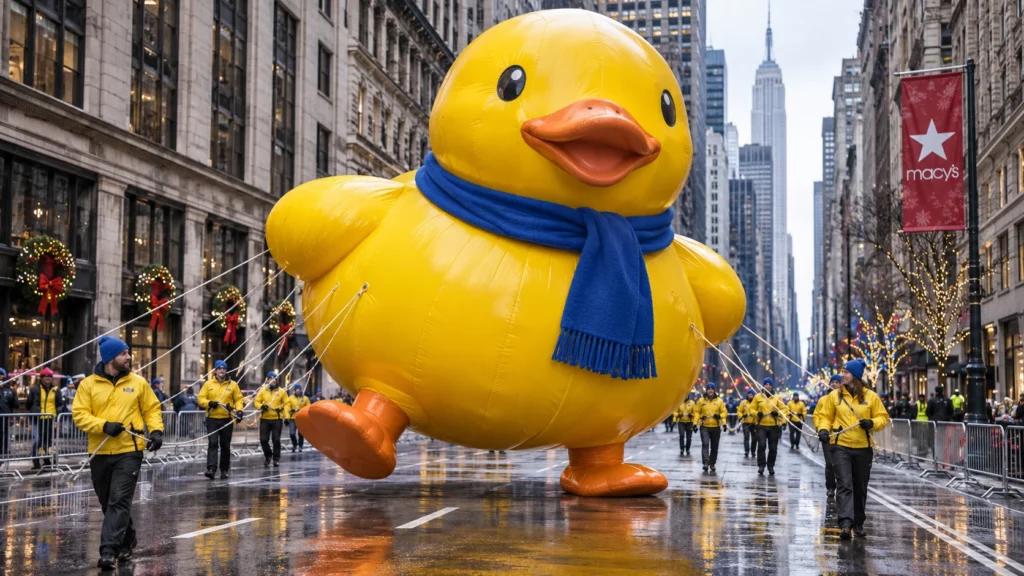
NEW YORK — Macy’s has asked the giant balloons in its Thanksgiving Day Parade to spend a few minutes finding out what they look like walking.
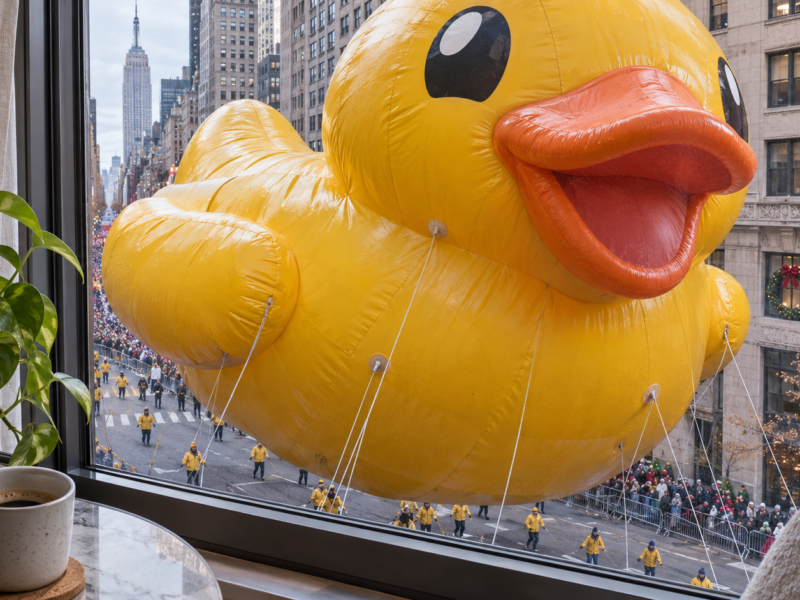
The request went to balloon handlers after reports that gusts could be strong enough to keep some of the inflatables on the ground. At a rehearsal, a yellow duck was brought to within an inch of the pavement and moved about a car length down a side street. Two people said it looked fine. A third said you couldn’t tell whether it was walking or sitting in traffic.
The Associated Press reported that windy, wet weather could affect the parade balloons and that Macy’s plans to make a decision based on conditions the morning of the parade. As the 100th edition approaches, some people have suggested it would be a shame to tell a giant duck that there was nothing available to it below the second floor.
“Our first thought was that people would see the feet and understand what we were trying to do,” said rehearsal supervisor Sandra Phelan, who has been asked to work out how the duck might pass a storefront. “It turns out the feet were painted on the bottom. We’d always assumed somebody would be looking up at them.”
The duck has made more progress with a different maneuver in which it is moved forward a little faster than the people around it. This looks quite a bit like a duck advancing with purpose. The problem is that once it stops, it appears to be waiting to cross the street. At an intersection where a handler actually was waiting to cross, the balloon was seen by a small child who asked his mother if it had to go to school.
One proposal would have each balloon come down the route beside a band. A band director was shown a rehearsal clip and asked how much of the sidewalk the duck needed. He said that if they could agree on a speed, the duck could go in back and the piccolo players could check that it was keeping up. A piccolo player who saw the clip asked if people were being allowed to switch instruments before the parade. She’d like to play something she could see over.
There are still questions about what television viewers would see. A camera operator at street level reported seeing mostly the underside of the duck’s chin. He crouched down and got a shot that looked convincingly like a normal balloon in flight, as long as he cut it before the duck passed a traffic cone. A producer suggested they keep the cone in the clip to show how far engineering had come in the hundred years since the first parade.
A man watching the rehearsal from a nearby building said he would appreciate being able to see the duck from his apartment. Organizers said that would depend on what floor he lived on. He said he was on the fifth. They asked if he could get to the lobby, where he’d have a terrific view of the rest of it.
Phelan is hoping the weather cooperates and the balloons can go up as planned. For now, she wants the handlers to have enough practice that they can keep up with the duck if it gets going. During the last rehearsal the crew stopped to give a car room. The driver rolled down a window and asked whether the duck was waiting for a person to come out of a building. A handler said they were waiting on the car.
The crew was told to put the duck away before evening traffic. Getting it through the loading door took some time. From the back of the building someone called out to ask whether the duck was the thing that had been taking up a temporary spot outside. Phelan went to answer, but the duck was between her and the door.
“I’ll be with you in a second,” she yelled. There was a brief wait while the duck finished coming inside.