Good News: Taylor Swift Has Trademarked Everything Except Talent, Which Remains Safely In The Public Domain
Swift's lawyers have protected phrases, eras, greetings, and several merchandise-ready nouns, but officials say no filing has yet established exclusive rights to hitting the correct notes.
WASHINGTON: After years of sending lawyers into the trademark office to claim phrases, eras, greetings, colors, numbers, tour slogans, and anything else that can be printed on a $75 hoodie, Taylor Swift has still not filed for talent, a startling omission for an artist whose concerts would benefit enormously from legal ownership of singing ability.
The gap became clear this week after the pop star’s team added more paperwork around Swift-linked language and imagery, but again failed to protect pitch, range, breath control, staying in key, or the dangerous act of making a microphone necessary.
“At a certain point, you have to ask why the applicant can claim This Sick Beat but not a single clean note,” said Lenora Voss, a senior examiner at the U.S. Patent and Trademark Office who has processed enough Swift filings to know the month of August has lawyers now. “We have Taylor’s Version. We have Swiftmas. We have tour language. We do not have evidence that talent is being used in commerce.”
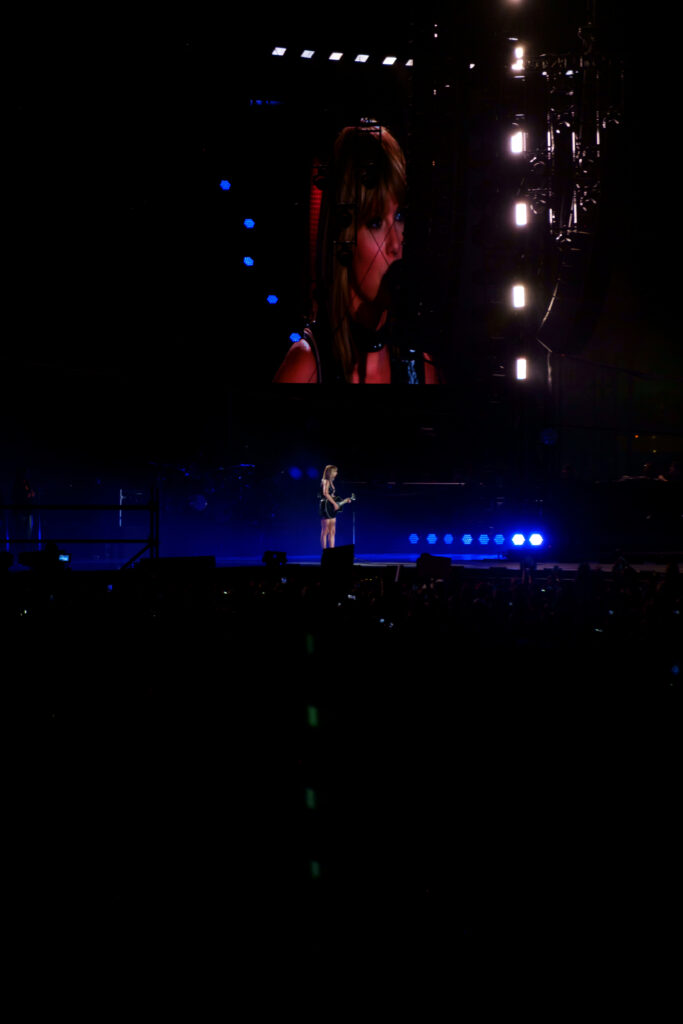
Voss said the office would need a specimen showing talent attached to the goods and services listed in the application. Previous materials submitted by Swift’s team, including stadium footage in which 68,000 people sing the chorus while Swift walks confidently near a headset microphone, did not meet the legal standard.
“A crowd doing the hard part is not the same thing as the applicant demonstrating vocal ability,” Voss explained. “That would be like trying to trademark basketball because you own sneakers and stand near a hoop.”
According to trademark attorneys, Swift’s catalog of protected concepts already covers enough territory to make an English teacher whisper please stop into a supply closet. Her team has protected or attempted to protect phrases tied to songs, tours, fan culture, re-recordings, merch, greetings, and the kind of ordinary words that become legally expensive the moment a billionaire says them into a camera.
Talent remains loose in the street.
“It is definitely an opening,” said entertainment attorney Marsha Pell, who specializes in celebrity trademarks and invoices that arrive in PDF form at 11:58 p.m. “If Taylor can protect the words Hey, it’s Taylor, there is no obvious reason she cannot at least attempt to protect talent, aside from the part where she may be asked to prove she has used it.”
Pell said a talent application would likely cover songwriting, stadium pointing, scarf litigation, surprise-song administration, friendship bracelet monetization, billionaire relatability, private jet denial, and turning one diary entry about a man with cheekbones into 14 revenue streams.
The filing would face one major problem: distinctiveness. Trademark law generally requires the public to associate a mark with a single commercial source. In the case of talent, officials worry consumers may associate the term with singers who can sing, musicians who can play instruments, or performers who do not require a three-hour friendship economy to distract from the note that just happened.
“That is where it gets tricky,” Pell said. “If a consumer hears talent and thinks of Adele, Beyonce, a jazz singer in a basement, or a 12-year-old on YouTube who can stay in key for free, then Taylor’s claim has a weakness.”
Swift’s representatives did not respond to VanFlip’s request for comment, which was delivered in a friendship bracelet spelling out TRY A VOCAL COACH.
Fans immediately celebrated the missing trademark as another generous act from an artist they insisted definitely has talent and is merely allowing the rest of the industry to borrow it.
“She could trademark talent tomorrow,” said 26-year-old Swift fan Kaylee Drumm, who had been online since 4:12 a.m. explaining that live vocals are a patriarchal trap. “But she does not need to. Taylor writes songs, runs businesses, owns her masters, and sometimes stands near a piano while a chord does the heavy lifting. That is talent in a different format.”
Drumm added that people mocking Swift’s singing were jealous because they will never know the pressure of performing 46 nearly identical breakup monologues in front of a glowing wristband farm.
Music executives say a successful claim could reshape the industry by forcing other artists to rebrand their own talent under safer terms. Several labels have already advised new singers to use alternatives such as craft, ability, sauce, pipes, competence, or, for legal reasons, whatever Bruno Mars is doing.
“We cannot have a young artist walk into the studio and accidentally infringe Taylor Swift by hitting a note,” said one A&R consultant. “Until this is resolved, we are telling clients to hum quietly, avoid bridges, and never let a lyric sound like it survived editing.”
Several vocal coaches privately welcomed the possibility of a filing, saying it could finally settle whether Swift’s singing ability exists as a protectable commercial asset, a fan belief system, or background decoration for a merchandise company with albums attached.
“I would love to see the specimen,” said one coach. “Give me 20 seconds of raw vocal, no crowd, no stack of backing tracks, no stadium screaming, no cinema edit, no fan account adding the caption VOCALS. Just the note. Put the note on the table.”
At the trademark office, staffers have reportedly prepared a list of acceptable evidence in case Swift’s team decides to move forward. The list includes one unassisted belt, one clean high note, one live performance where the backing singers do not look like they are carrying a couch up stairs, or one bridge that cannot be legally classified as a text message with drums.
“We are not trying to be difficult,” Voss said. “We approved plenty of her phrases. We understand that the American economy now depends on women named Madison buying four vinyl variants of the same private thought. But talent is a big word. We need to see use.”
Swift’s business team is said to be weighing several fallback applications, including exclusive rights to Stop Saying She Has Enough Money, That Was Actually A Hard Song To Sing Live, and You Just Hate Successful Women, a phrase expected to move 400,000 tote bags before any court can stop it.
At press time, the trademark office had received an emergency filing for Not Everyone Needs Vocal Range When They Have Easter Eggs.