Netflix Quietly Tests New Feature That Pauses Your Show To Ask Why You Are Still Alive
Netflix tests a feature that pauses long binge sessions to ask subscribers why they are still alive before starting the next episode anyway.
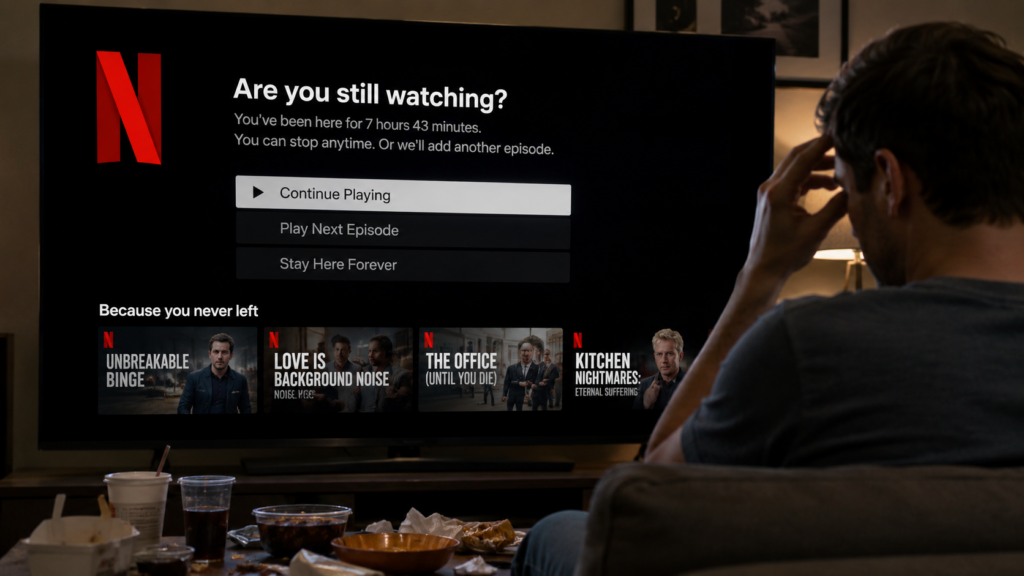
LOS GATOS, Calif. – Netflix has confirmed it is testing a new viewer wellness feature that pauses a binge session every six hours to ask subscribers whether they are still enjoying life in a meaningful way before automatically starting the next episode of The Diplomat anyway.
The feature, currently rolling out to select Premium subscribers in Phoenix, Tampa, and one apartment complex outside Newark that corporate described as "at risk for prestige drama dependency," appears after extended viewing sessions and presents users with three options: Continue Watching, I Guess, and My Family Has Concerns.
Users who fail to answer within 15 seconds are automatically enrolled in a limited series documentary about the history of cocaine.
"We're trying to create a more responsive entertainment ecosystem," said Netflix Chief Product Officer Eunice Kim during a media preview held inside a room decorated to look like a millennial's apartment after three cancelled plans. "People don't just want content anymore. They want accountability. They want to feel gently observed by a corporation while eating shredded cheese over their sink at 2:14 a.m."
According to internal materials leaked to Streaming Insider Pro+, the new feature, codenamed Project Bedrot, uses webcam eye-tracking, breathing rhythm analysis, and pizza delivery frequency to determine whether a subscriber is watching recreationally or actively dissolving as a person.
One slide from the presentation reportedly categorized viewers as Casual Viewer, Weekend Dissociator, Fully Reclined, or Content Hospice.
Netflix executives said the company was inspired by user feedback requesting fewer autoplay interruptions and more "holistic engagement experiences," which in practice means the platform now occasionally interrupts programming with full-screen wellness check-ins like, "Hey. We noticed you watched 19 episodes of Suits without moving. Is everything cool at work?"
Another message reportedly reads, "You have consumed 11 straight hours of true crime content. The algorithm would like to remind you your husband is not statistically your biggest threat."
One beta tester in Tempe said the feature became invasive after Netflix detected he had not left his couch in two days and remotely dimmed his apartment lights "to create a gentler environment for decline."
"It started recommending soups," said 34-year-old logistics coordinator Brian Kessler. "Not cooking shows. Soups. Just images of soup with calming music."
Another subscriber reported receiving a push notification reading, "You've rewatched The Office 312 times. We have forwarded your information to a community college."
The company has denied rumors that future updates will include direct interventions from actors appearing on-screen. However, several users claim an AI-generated version of Jason Bateman briefly emerged during an episode of Ozark to ask whether they had considered standing up and walking around the block like a functioning adult.
Netflix says the technology is still evolving.
"We're very excited about predictive streaming," said Vice President of Consumer Retention Dana Feld. "Soon the platform will know you're about to spiral before you do. Ideally, we can start a cozy murder mystery roughly 11 minutes before the first bad thought."
The feature reportedly integrates with several smart home devices. One partnership with Peloton was suspended after Netflix accidentally locked 8,000 subscribers onto exercise bikes until they finished Love Is Blind: Sweden.
Wall Street analysts have reacted positively to the changes. Morgan Stanley upgraded the company after Netflix unveiled a roadmap showing future ad-supported tiers may include mandatory hydration reminders from Pedro Pascal, biometric shame notifications, sponsored grief, and AI-generated friends who ask if you've seen the new season yet so users can continue describing television plots instead of developing hobbies.
The company also confirmed it is exploring a Sleep Continuity Experience that keeps shows playing after viewers lose consciousness in order to maintain engagement metrics.
"We found many subscribers were unfairly escaping content through rest," Kim explained.
At press time, Netflix had reportedly greenlit a new eight-part prestige drama about a man who watches too much Netflix, with each episode running three hours and ending automatically 14 seconds before viewers can recover enough to turn the TV off.